Saturday, July 19, 2008

The NYT on KFP

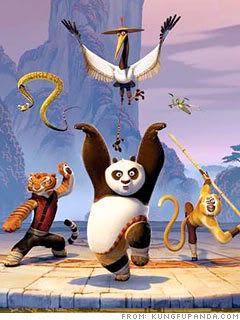
The New York Times has now weighed in on the angst in China over Kung Fu Panda:

... A few weeks ago, when the movie opened in China, there was already a call for a boycott — on the grounds that foreigners had lifted one of China’s most precious symbols, the panda, and were using it for their own profit.

The boycott never got off the ground, and “Kung Fu Panda” was an immediate box office hit. In the last few weeks the movie has provoked a deeper discussion, even a degree of soul-searching and critical self-examination of the sort that China, which has an amazing mix of ambition, self-confidence and insecurity, goes through from time to time ...

In a way, “Kung Fu Panda” is only the latest illustration of a centuries-old tradition whereby Western artists have used China and other Asian countries to produce enduring works of art. You only have to think about Gilbert and Sullivan’s “Mikado” or Puccini’s “Turandot” or, for that matter, the animated feature “Mulan” of a few years ago, to recall the strength and age of this tradition.

Indeed, all of these works illustrate a continuing historical imbalance in cultural cross-fertilization. The West’s use of China as an artistic setting is unmatched by any Chinese use of Europe or America as backdrops for its own cultural productions.

That imbalance is connected to another element in the picture: the animation itself. From Walt Disney on, Americans have long been developing animation as a cinematic form, while China, in this particular area of the arts, has not developed much ...

Let's give the Middle Kingdom a break. China is only thirty years out from the dead hand of Maoism and the Cultural Revolution. Kind of hard for individual artists to flourish in that atmosphere. They're all beaten into conformity with the Party Line (whatever it happens to be that month) or shipped off to a re-education camp until they've seen the light.

China, of course, has ceased being a Communist state. Today it's closer to Franco's Spain than Stalin's Russia. Lots of capitalism, but also plenty of dictatorship of the fascist type, which still makes sensitive, artistic souls unhappy:

“China has first-class directors, first-class playwrights, first-class actors, but it’s a shame that we have censorship by government officials,” one anonymous blogger wrote. “If they don’t like your work, then there’s no way.”

Mr. Lu, the commentator in China Daily, had a telling story in this regard, about a project he undertook to produce an animation for the Olympic Games. “I kept on receiving directions and orders from related parties on what the movie should be like,” he recalled. “We were given very specific rules on how to promote it.

“Under such pressure, my co-workers and I really felt stifled,” he continued. In the end, “the planned animation was never produced.”
Click here to read entire post

Box Office Action

The Dark Knight rolls to a monster Friday with $66.4 million. (Box Office Mojo has a summary of the biggies from the past six years here.) And Variety notes:

Earning an unheard of $66.4 million in its first day, Warner Bros.’ Batman sequel “The Dark Knight” is poised to become the highest opener ever for a non-holiday weekend after “Spider-Man 3,” which debuted to $151.1 million.

“Dark Knight,” directed by Christopher Nolan and returning Christian Bale as the caped crusader, easily soared past the $59.8 million earned by the “Spider-Man” three-quel on its first Friday in May 2007.

Not only that, but the smash success of “Dark Knight,” along with Universal’s musical romp “Mamma Mia” and several strong holdovers, should deliver the film biz the best three-day weekend ever in terms of overall grosses, which could come in as high as $250 million. Previous record-holdover was the weekend of July 7, 2006, which brought $218.4 million in total grosses, led by the $135.6 earned by “Pirates of the Caribbean: Dean’s Man’s Chest.”

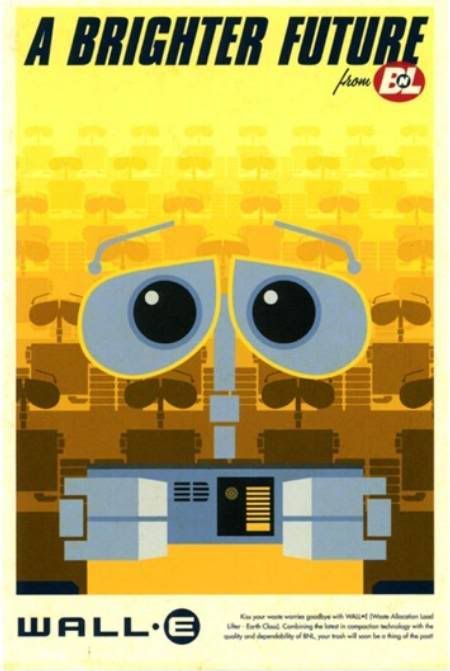
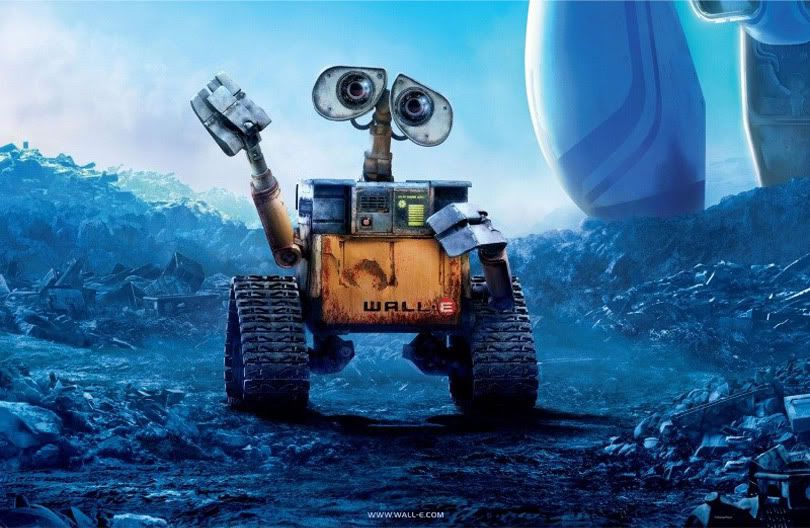
There are two animated flicks in the Big Ten, Wall-E at #6 (and a $175.7 million box office total) and Space Chimps at #7.

So I guess Chimps won't be duking it out with the Caped Crusader for the top spot. A shame.

Meanwhile, Kung Fu Panda has dropped out of the Ten to #11, waddling along with $205.3 million ...

Add On: The weekend totals offer one surprise -- the size of Batman's box office take -- as The Dark Knight and Mama Mia finish #1 ($155.3 million) and #2 ($27.6 million).

The new Batman movie "The Dark Knight" smashed the weekend record set by "Spider-Man 3" last year, selling an estimated $155.3 million worth of tickets during its first three days of release across the United States and Canada, distributor Warner Bros. Pictures said on Sunday.

Downlist, there were three animated features in the Top Ten: Wall-E at 6th place with $182.5 in the till, Kung Fu Panda at tenth with $206.5 million, and the tepid Space Chimps at #7, collecting $7.3 million and breaking my heart by not making a stronger assault on the top spot.

Click here to read entire post

Friday, July 18, 2008

Summer Linkorama

Now this would make a gang-buster live-action Batman movie ...

Another round of 'toony links for a summer day.

Variety asks the age-old question:

So why can't there be an animated performance category to recognize the teams that create toon characters, from voice actors to animators?

Answer: Because the mostly live-action Academy has minimal interest in doing this.

Finally, not Andrew Stanton this time but Wall-E supervising animator Angus McLane holds forth on Pixar's latest:

And when you come to the point where you’re going ahead with the project, and you’re tasked with animating a robot, how did you tackle that?

It’s actually very similar to animating fish!

You think about fish, and you’re like I don’t know how I’m going to animate these things, and you look at footage of fish and start off by trying to replicate it exactly. And then once you figure out how fish move, you go okay, I’ve got a scene where a character, Fish X, says blah blah blah, and so you go after he says blah blah blah, I’ll have the tail wiggle a little bit, just to remind the audience that this guy’s underwater. And then we’ll flip the fin a little bit, and wiggle around, and so you get this thing where you’re always giving indications to the audience that the character is what they are.

Speaking of the Wallster, Disney is doing some savvy marketing for the flick as it rolls out across Yurp:

... for months now, there has been a lot of buzz about this film. Wall-E opened in US theaters on June 27th and is set to open in UK theatres on July 18th, followed by European theaters at the end of July/beginning of August. The buzz is mainly thanks to short and funny teaser videos starring Wall-E ...

Kung Fu Panda has apparently really ticked off Chinese patriot Zhao Bhandi:

"Designing the panda with green eyes is a conspiracy. A panda with green eyes has the feeling of evil. I have studied oil painting, and we would never use green eyes to describe a kind-hearted figure. So I ask them to open their creative meeting records of this film and explain why the green eyes?

"Next, why is the panda's father is a duck? ..."

Yeeahh. Why is Daddy a duck? Seems like inter-species canoodling to us, as it does to Bhandi. So of course, he's suing over this outrage.

As the new Batman feature smashes box office records, writer Alan Burnett talks about the animated version:

How long did you work on this -- was this an easy story for you?

The story came pretty easily. The story wrote itself in a way. I liked doing 11 minutes. It's short and sweet. A little bit like doing a comic book. It's just fun. This is not "Gone with the Wind," you know? It's just a good time ...

And as The Dark Knight rolls out, Warners works to make sure no greenbacks go unharvested. WB is putting "Comics that Mooove" on the intertubes:

the studio is also set to unleash an online series starring the Caped Crusader that it hopes will usher in a new kind of Web entertainment: a hybrid of comic books and animation that Warner calls "motion comics."

"Mad Love" is a series of Web shorts drawing on a particularly popular comic book featuring Batman and the Joker, the first chapter of which will be released for downloading next week ...

The shorts are a kind of hybrid between a printed comic and a cartoon. The animation isn't nearly as rich as a fully animated cartoon, with only limited motion that comes in the form of wisps of smoke, darting eyeballs and the like. But the story is advanced with music and voiceovers that speak the characters' parts.

Warner, a unit of Time Warner Inc., sees the initiative as a way to unlock value from the company's D.C. Comics library by creating a new kind of comic that can be distributed via the Internet, mobile phones and video on demand ...

We'll leave you with this morsel:

A DRUNK punter who gave an Ipswich Cup crowd a chuckle by galloping on the track disguised as the shaggy cartoon crime fighter Scooby Doo has been fined $500.

Nicholas Anthony Allen's joke backfired today when he was exposed in the Ipswich Magistrate's Court as the offender of the booze-fuelled prank.

Allen, a electrical cable joiner, was one of three men to front court for invading the track and racing down the home straight during the June 14 race meeting at Bundamba's Ipswich Turf Club.

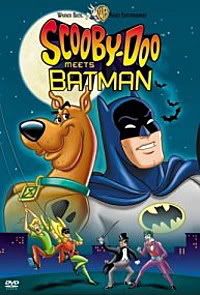
I'm telling you, Warners is missing a trick not teaming Scooby and Batman. Box office dynamite!

Click here to read entire post

Thursday, July 17, 2008

Sony Pictures Animation, The Next 3-D Player

Sony Pictures Animation will be jumping on the three-dimensional 3-D train in short order:

"Cloudy with a Chance of Meatballs" will be Sony Picture Animation's first stereoscopic 3-D digital release.

"Food falling from the sky lends itself so well to 3-D," said Bob Osher, president of Sony Pictures Entertainment's Digital Production division.

This picture has been in development for some little while now, going through cast changes and more cast changes. I know the story crew has been remolding it to the hearts desires of Sony execs, and that the people on it would like to see it get made.

Sometime.

Looks as though (now?) it will.

Click here to read entire post

Wednesday, July 16, 2008

A Story of Story Revisions

Across the white-capped pond, the Independent tells a tale of story revisions:

[The Princess and the Frog], a musical set in 1920s New Orleans ... was supposed to feature Maddy, a black chambermaid working for a spoilt, white Southern debutante. Maddy was to be helped by a voodoo priestess fairy godmother to win the heart of a white prince, after he rescued her from the clutches of a voodoo magician.

Disney's original storyboard is believed to have been torn up after criticism that the lead character was a clichéd subservient role with echoes of slavery, and whose name sounded too much like "Mammy" – a unwelcome reminder of America's Deep South before the civil rights movement swept away segregation.

The heroine has been recast as Tiana, a 19-year-old in a country that has never had a monarchy. She is now slated to live "happily ever after" with a handsome fellow who is not black – with leaks suggesting that he will be of Middle Eastern heritage and called Naveen. The race of the villain in the cartoon is reported to have also been revised.

The film studio began making changes a year ago, first to its title, The Frog Princess, which some had interpreted as a slur. Amendments to the plot followed.

Now, I've got zero knowledge of what changes have taken place with TPATF and what's remained the same. I talk to the board artists every few weeks, but our conversations never dwell on the continuity of the film on which they're working. We generally dwell on studio gossip (that's what is important, after all).

So maybe the Independent's reporting is dead on, and maybe it's fabrication, I've no idea what the ratio could be. But I do know that almost every animated film made has gone through changes ... sometimes BIG changes ... during the course of production. And I also know that studio execs are sensitive to having offensive things in one of their pictures. And when the main characters are black and most or all of the story and production crew is white, the sensitivity becomes hyper. (And probably should be).

Studios are not in the habit of offending wide swaths of the ticket-buying and DVD-purchasing public. They're game is to earn money, not make self-defeating philosophical statements. Ralph Bakshi caught hell in various quarters for Coonskin, Disney is not likely to invite similar controversy.

There might be others, but the only three animated films I recall having African Americans as the central characters are the Bakshi film, Bebe's Kids, and the upcoming Princess and the Frog. Of the three, only Bebe's Kids had an African American director.

The one thing I know the British paper is right about are the Aladdin changes. Lyrics were changed, and the city in the film -- unmistakably Baghdad -- was changed to Agrabah. See, there was this war in Iraq (the first edition) gathering on the horizon at the time, and Disney execs were a little anxious about box office prospects if they didn't change the original title The Thief of Baghdad.

Empires fall and recessions come and go, but Hollywood paranoia about box office grosses is eternal.

Click here to read entire post

The Indecision is Over

... Let the employment begin!

Kevin beat me to the punch with this, but I post the news anyway:

After five weeks of negotiations, we have accepted employment as writers for Sit Down, Shut Up! under a new contract.

Though the program will be produced under the jurisdiction of IATSE Local 839, The Animation Guild (TAG), we have achieved Writers Guild of America (WGA) parity in key areas such as auditable residuals, new media, script fees, merchandising rights as well as a guarantee that these gains apply not only to ourselves but also to all future writers on the show.

We thank the WGA for its guidance and support during this process. We believe we’ve made a statement to the studios how important the standards of the WGA are to working writers. All animation writing -- television and features -- should be covered by the WGA.

This contract is a compromise: an improvement over the standard TAG terms we were initially offered, but not full WGA coverage. Compromises are never easy nor satisfying, always less comforting than a clear victory. We know that this is part of an ongoing struggle.

Reaching a deal will allow this program to move forward, providing jobs for many writers, animators, actors and production staff. Not every writer originally offered employment on Sit Down, Shut Up! has decided whether to return, and we understand and respect whatever decision they make. We remain hopeful that all animation writing will one day be covered by a WGA contract ...

As we say, negotiations are about leverage and momentum. It appears that nobody came away from this totally satisfied, but I'm happy that the writers made a deal that's acceptable to them. And I'm pleased ... no, delighted ... that a lot of folks are going to have work for a while.

Congratulations to everybody.

Add On: Craig Mazin at Artful Writer has an eloquent take on the SDSU writers, their victory, and the WGA.

Add On Too: Ms. Finke brings us the rest of the story:

After lying to the writers of the Sit Down, Shut Up! primetime animated series that it would be a WGA show, and then watching those same writers stalk off the IATSE toon, Sony offered a sweetened deal -- including payments of as much as $200,000 of additional compensation through a blind script deal -- to convince some of the scribes to come back.

Most of the writers -- including Josh Weinstein, Rich Rinaldi, Aisha Muharrar, Alex Herschlag, Laura Gutin, Dan Fybel, Aaron Ehasz, Michael Colton, and John Aboud -- wound up coming back.

And so it goes.

Click here to read entire post

Writers, Animation and Otherwise

Here's a short phrase I hear that gets me down:

WGA writers write ...

prime time sitcoms ... live action features ... the overwhelming majority of animated features ... all prime time animation.

The wording bugs me. It's like the Writers Guild hatches writers out, and then the writers write, while the WGA looks on like a proud parent.

I don't think so.

The Writers Guild represents work (live action, animation, video games, news copy) and writers perform that work, becoming WGA members in the process, which is fine.

I have no problem with that, nor the formulation:

Writers who are members of the WGA write ... prime time sitcoms ... live action ... animated features ... prime time animation.

No writer that I've ever heard of is owned by a union or guild. Writers write things, and some of those things are under the jurisdiction of labor organizations.

If a writer composed rhymed couplets for greeting cards under the Rhymed Couplet Guild collective bargaining agreement as a Rhymed Couplet Guild member, and then commenced writing an action screenplay for Warner Bros., would anybody say, "Hey, that Rhymed Couplet Guild writer is doing the new Nick Cage picture!"

Uh, no.

Because there are no Rhymed Couplet Guild writers, just as there are no TAG writers, or WGA writers. There are only writers who perform work under various union/guild contracts, and so become members of various unions and/or guilds by virtue of the work they do.

Maybe the above is a small distinction, but it's a distinction that I believe to be important.

As a Wise Old Union Rep once said to a roomful of other union reps: "Workers follow the work, they don't follow unions."

Click here to read entire post

Tuesday, July 15, 2008

Siddown, Shaddup -- A Go?

Yesterday (Monday) I heard from Sony that the company is "close" to an agreement on Sit Down, Shut Up "unless something else comes up." And I read this:

... now it looks as though things are finally progressing forward. The issue has been about which union the show's contract falls under – with Sony Pictures Television insisting the show is IATSE ...

It appears the show will remain under the IATSE contract, as Sony insisted it would. At the Television Critics Association event in Beverly Hills, FOX head Kevin Reilly said he had hoped to have everything finalized by the time he faced the press this morning. "We're still crossing Ts," Reilly said. He added that, as things seem to be heading now, "Mitch Hurwitz will stay, a couple of writers will leave, and we'll add a couple of writers." He added that "By today we'll hopefully be moving forward with a writing staff."

As I've said here and elsewhere, the company has consulted with the IATSE (our mother ship) and the SDSU writers. We're still hopeful that the show goes forward and everyone returns to work -- writers and artists both.

Maybe in 48 hours (or less) we'll know for certain.

Click here to read entire post

Sinbad and the BIG MacGuffin

Kevin writes:

I mentioned previously that 'Sinbad - Sailor of the Seven Seas' might be my least favorite film among those I worked on. I’ve always been pretty good at separating the work from the product — I loved working on 'Sinbad', and the production was a great experience. I’d been promoted, I was assisting amazing animators (James Baxter and Jakob Jensen), I was getting scenes of my own, the directors and production staff were cool, I was hanging with a great posse of junior animators, the food was free and tasty, life was good all around. But the film? Not so much.

I never really bought into the premise of the film, and ultimately neither did the audience. I could go on at length about some of the story and character failings, but I’ll lay out my thoughts on one major problem. It had the biggest MacGuffin in the history of film. Not just a big MacGuffin, but a MacGuffin that needed to be really important to the story. The first rule of MacGuffins is that they are the thing that the characters care about, but the audience doesn’t.

Alfred Hitchcock is usually credited with coming up with the concept of the MacGuffin . . .

Click the link above for the rest of the post.

Click here to read entire post

Monday, July 14, 2008

Worker Abuse, Part XI

We harvest this pearl from the cgsociety.org forums (via TAG blog's comment thread):

According to David Rand, special effects artists worked for Meteor Studios, a company established by Discovery Communications of Virginia (Discovery) (owners of the Discovery Channel) and Evergreen Films of Pacific Palisades (Evergreen). During October, November and December of 2007, artists worked without pay; some put in 100-hour weeks and stayed loyal to the project with the promise of pay as soon as the accounting glitch was fixed. Most of the artists who applied their talents to the creation of the film have families, and half are American freelance artists like Rand, whose hope for a bright Christmas was extinguished when all artists were laid off without pay in December upon delivery of the film.

Per the story, this small, sad event isn't getting much play in the mainstream press, like almost none.

Not much of a surprise there. Workers being abused isn't news anymore, it happens so often. In our small corner of the forest, we hear of it occuring every six months or so. But here's the skinny. Whenever you hear of a friend that's working without pay (and usually the friend is being harangued by management to "stay loyal" and "take one for the team" until the "payroll problem" is cleared up), scream at them in your loudest and clearest voice:

Put down your mouse! Get the hell OUT of there! You out of your mind?! You don't work for no pay!! That's @#$% NUTS!"

Because guess what? There's nothing and nobody to be loyal to.

The employer has breached the circle of trust, torn it into small shreds and stuffed it down the toilet. People work for money, not a candy gram. When the money is not forthcoming, then laws have been broken, and nobody should aid and abet a lawbreaker. Period. Full stop. End of saga.

We wish Mr. Rand good luck in getting that million dollars he and others are owed. And we applaud his calls for unionization in the VFX world. Fact is, stories like this were rampant all around Hollywood back in the old days, which is a major reason for the rise of organizations like the DGA, the WGA, SAG, the IATSE, and the little ol' Animation Guild.

As a Hollywood old-timer said: "They worked us 'til we dropped. Thank God the unions finally got in."

Click here to read entire post

So ... How Much Do These Movies Cost?

"These movies" being Kung Fu Panda, Wall-E, and Horton Hears a Who*.

The first thing to know: What a studio says a movie costs and what it really costs might be two different things. I know first-hand that companies sometimes put costs incurred by one film onto the production number of another film. (Hard to believe that fine, ethical business executives would do such a thing, but there it is).

Second thing to know: When you look at the alleged costs for this or that film and compare them, there's no way of knowing if you're comparing the same thing. As The Wise Old Production Exec told me moments ago:

Some pictures include advertising and distribution costs in their announced budgets, others don't. Some include costs of A-list talent in the up-front budget, others might not if most of those costs are percentages of gross on the back end. And the costs of studio overhead vary widely ...

By the Wise Old Studio Exec's reckoning, Blue Sky's overhead would be quite a bit less than the overhead for Pixar/Disney. As the WOSE said:

The last studio I worked for, I estimated $120,000 per employee, per year. So figure it out: if the studio is carrying 300 employees, that's $36 million per year. And if a picture takes two years to produce, that's $72 million, assuming the full staff is working on that one picture for all two years.

I don't know exact numbers, but Pixar has a larger staff than Blue Sky Animation.

From the outside, you can never know with total certainty what a picture actually costs. A decade ago, a management person at the late, lamented Warner Bros. Feature Animation studio informed me that Quest For Camelot ran up a tab that was a whole lot higher than the one Warners admitted to. Execs officially maintained the feature cost $80 million; my source said it was more like $130 million, but much was charged off to "studio overhead."

Then we come to the three box office champions cited above. DreamWorks Animation honcho Jeffrey Katzenberg has said DreamWorks's features cost $150 million for new models, $120-$130 million for sequels because a lot of fixed costs that carry over have already been paid for. But Mr. Katzenberg is likely ballparking, since KFP is officially listed at the $130 million mark.

Wall-E was a film in production for a long time, which might account for its $180 million price tag. As the WOSE informed me:

Eighty percent of a picture's costs are labor, and the longer a film is in work, the more expensive it will be. If you've got lots of people on payroll for years, the picture ends up higher priced ...

Studios have different way to attack costs. One obviously is the size of a crew, another is length of production time. (We won't count "just make it up.") Half a century ago, Sleeping Beauty was the most expensive animated feature Walt Disney Productions had yet done, costing around $4 million. Two years later, the studio produced 101 Dalmations for half that price, using less than half the artists.

You see? Feature budgets can be brought down.

* For the original back-and-forth on studio costs, go a couple of notches down the blog.

Click here to read entire post

Sunday, July 13, 2008

The Con of San Diego

I'll tell you how long it's been since I've been to the Comic-Con in San Diego.

The last time I went, the thing was held in a couple of rooms of the El Cortez Hotel (that's up on the hill near downtown S.D.) and there were a bunch of people running around dressed in Luke Skywalker and Princess Leia costumes.

It was like, 1977. Maybe 1978. The main things being hawked at the Con in those days were ... comic books. Big surprise. Variety's Brian Lowry remembers the way the Con used to be:

Back then Comic-Con was truly about comicbooks and the only stars one was likely to see there were the artists and writers who created them. The confab itself was so strapped for cash that each year the artists donated work -- which they dutifully sketched out on easels as a small crowd watched -- that were auctioned to help support the gathering.

In those early days, the entire convention of a couple thousand people could be held in a single hotel. One large ballroom functioned as a dealers' room, where vendors displayed their wares, and an adjacent space housed panel discussions. Gradually, studios began to preview movies there, but as often as not those events were disasters, irritating fans as opposed to whetting their appetites.

Although it was more than 30 years ago, for example, I keenly recall a preview of the 1978 feature "Superman," where the studio rep described the campy villain Lex Luthor, played by Gene Hackman, as a real-estate mogul, not a master criminal. He was practically hooted off the stage ...

So the festivities start again next week, but the small, hardy band that roved about the tables at the El Cortezn has now grown into a mob in the hundreds of thousands.

Progress. Or not.

President Koch has plans to attend. I have plans to decide what I'm going to do later.

Click here to read entire post

Saturday, July 12, 2008

Mid July B.O.

In search of James Mason and Pat Boone ...

And the b.o. is indisputably tangy this time of year.

Hellboy blasts through the #1 with a $13,770.000 tally, and we've got ourselves another strong comic book opening. (Hancockslides to a competitive #2.)

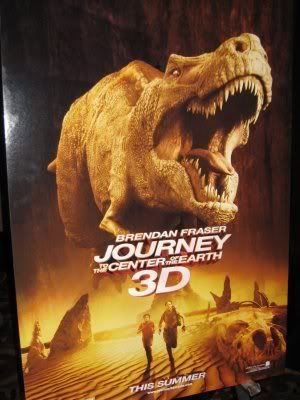
On the animated front, Wall-E drops to #4 -- behind Journey to the Center of the Earth 3-D -- and now has $151 million in the piggy bank.

Kung Fu Panda, tearing up the box office over in the Middle Kingdom ($20 million to date), occupies the eighth slot stateside and is now just shy of $200 million.

Update: The weekend finals are in, and Hellboy takes the top spot (barely), with a $35.9 million, while Hancock finishes a close second with $33 million.

The Journey to the Center of the Earth, remake in three dimensions collected $20.5 million and the Show position, as Wall-E fell to fourth while picking up $18.5 million.

Down at the bottom of the Top Ten, #8 Kung Fu Panda has moved over the $200 million marker and now has a cumulative gross of $202 million. Indy and the Crystal Noggin now has $310.5 million.

Click here to read entire post

SAG Ponders Options

So we're not quite done with the contract negotiating season.

A day after their counterproposal to major studios' "final" contract offer was rebuffed, Screen Actors Guild leaders huddled on Friday to consider their next move in a Hollywood labor stalemate almost certain to drag into next week.

In a brief statement released in the evening, SAG said its negotiating team "met behind closed doors throughout the day today discussing bargaining strategies. The negotiations team remains committed to continue to bargain for a fair contract."

I don't know what there's left to bargain for. The AMPTP keeps saying "no" when SAG brings up a new or revised proposal. And Mr. Rosenberg can keep saying that it was the news readers and sports announcers that passed the new AFTRA contract, not actors. Trouble is, the deal still passed.

And so the Screen Actors Guild is fast running out of options. The producers won't budge, the economy is tanking, and to do a strike the leadership needs to get a 75% approval from the membership.

And if that wasn't complicated enough, various high profile performers are weighing in how doing a job action now might not be a real swift idea:

Will Smith said that “With the writers’ strike and Hollywood having been through this already this year and having lost millions of dollars, [an actors' strike is] just really not a good time for America, for California, or for a lot of people I know and work with. I hope we can come to a resolution all sides are happy with before it comes to that again. If it has to happen, I hope it moves rapidly. But the economy is terrible and we don’t need to be contributing to it.”

And Charlize Theron said that “I just hope some adult conversation can take place and we can resolve this efficiently and fairly and without having to stop work all over the city and the world.” ...

Tense times. No wonder people are starting to feel like Christian Scientists with appendicitis*.

* Cribbed from Tom Lehrer.

Click here to read entire post

Friday, July 11, 2008

Friday Links

This bear is a big hit in China ... and some Chinese are saying: "Why didn't we create him?"

The weekend festival of links arrives with the following:

TIME Magazine beats the "Wall-E for Best Picture Oscar" drum:

... Cries that WALL-E should be considered for a Best Picture nod began as soon as the film hit theaters on June 27. Writers at New York magazine and sites like The Movie Blog and Obsessed With Film declared WALL-E worthy of a Best Picture, and high-profile movie critics are discussing the little robot's odds for that award among themselves ...

Ain't never going to happen. Academy membership is heavily skewed to live action categories, and no way are those folks going to give the top award to a cartoon. That's why they instituted a "Best Animated Film" category.

New series Click and Clack, directed by TAG Prez emeritus Tom Sito, premiered this week on various PBS stations around the country ...

Almost since the radio show started in 1987, there has been steady interest in bringing fictional Click & Clack, the Tappet brothers, to TV ...

Tonight, an animated adaptation, "Click and Clack's As the Wrench Turns" makes its national premiere ... "It was designed and developed in Connecticut," says Howard K. Grossman of CTTV of South Norwalk, executive producer of the series.

Grossman says his involvement began as a longtime listener.

"I'm a huge 'Car Talk' fan," Grossman says. "I tried to get on the show at least 100 times but I couldn't get someone to return my call."

He didn't get any reaction to his idea to turn the show into a cartoon series until he finally e-mailed the Magliozzis. "I got an e-mail back, saying they always thought of themselves as cartoon characters" ...

Over time, things changed in the approach to making the cartoon. "The original vision was a direct adaptation of the show, from a soundtrack of an existing show," he says. "That didn't work. It was missing something. It was too much like the radio show." ...

Characters based on the Magliozzi brothers were designed, and a group of color characters were created around them, from an Eastern European named Stash to an ex-Harvard professor named Crusty. The impeccably dressed Fidel is of indeterminate background ...

Variety gives a qualified thumbs up to the latest animated incarnation of Star Wars:

... as with the earlier "Clone Wars" shorts crafted using traditional cel animation, the vibrant imagery and sweeping scope provided by animation allows the series to achieve a theatrical level of excitement at a significantly reduced cost -- and in a tighter episodic format, transforming each mini-adventure into a get-to-the-fun-stuff romp. Alien worlds and characters are rendered in explosions of color, with the computer process creating extraordinary depth and detail ...

The Den of Geek has interesting mini-reviews of every DreamWorks animated film except for the newest one:

DreamWorks Animation has proven itself to be the only operation of its ilk to date to threaten the Disney/Pixar empire. But are its films any good?

Click on the link above and see if you agree with DG's judgements ...

Finally, the Washington Post tells us that the Chinese are a tad jealous of the hit film titled Kung Fu Panda:

... The blockbuster ... American animated movie that's set in ancient China, highlights Chinese culture, mythology and architecture and stars a kung fu fighting panda has filmmakers and ordinary Chinese wondering: Why wasn't this hit made . . . in China?

... Even an advisory body to China's parliament debated why China hadn't been first with such a big hit using Chinese themes. "The film's protagonist is China's national treasure and all the elements are Chinese, but why didn't we make such a film?" the president of the National Peking Opera Company, Wu Jiang, told the official New China News Agency last Saturday ...

I'll tell you why. Jeffrey Katzenberg got there first.

Have a most excellent weekend.

Click here to read entire post

Thursday, July 10, 2008

Siddown, Shaddup, the Resolution?

Yesterday, while I was in Northern California enjoying the balmy weather (102 degrees), the office was notified that artists working on Sit Down, Shut Up were being laid off due to lack of scripts, but that there was hope they would be rehired soon.

"Why?" the TAG office asked.

"Because it looks like most of the writers have agreed to come back to work," was the answer.

Ordinarily we're cynics about these things, also ordinarily we keep our pie holes shut until there's some kind of actual end result and not just hearsay. But now the trades have picked up the scent:

The month-long stalemate at Fox's new animated series "Sit Down, Shut Up" could be headed for a resolution, with most of the show's writers said to favor an agreement with producing studio Sony Pictures TV. Sony recently approached the scribes with a new version of the deal it offered them June 23. While the current proposal is said to include a more generous package than what's been previously presented, it is said to keep the main deal points from the previous offer intact, including maintaining the show's status as a signatory to IATSE, not the WGA. On June 12, the 14 writers on "Sit Down" walked out in protest of IATSE's jurisdiction over the show and in pursuit of coverage by the WGA. The writers claimed that they were misled by Sony that they would be covered by the WGA. Meanwhile, Sony has maintained that its TV animation division, Adelaide Prods., which produces the series, is a longtime signatory to IATSE.

Not all "Sit Down" writers are said to be on board for the modified proposal. At least two of the scribes, including one of the exec producers have declined it, meaning that if a deal is reached, not all original writers will return to the animated show, an adaptation of a live-action Australian series ...

For the sake of a lot of folks who will lose jobs, pay and benefits if the show slides beneath the waves, we hope that agreement can be reached.

We'll relay news each time we stumble across some.

Click here to read entire post

Salary Slavery

The past two days I've been in San Rafael holding new member lunches for employees at IM Digital. Lively groups. Lively questions.

But for me, one of the more interesting conversations took place right before the second noontime session, when a c.g. artist arrived early and said:

"This is like, a big change for me. I mean, getting overtime. I was working at a games company before this job, and everybody working there was salaried ... and working like, 100 or 120 hours a week. It was really abusive. The company said that 'this is the model for games' and just paid flats. People were told they'd be let go if they didn't do it."

This is a song I've heard before.

For the past dozen years, I've smacked up against the reality that many game companies use a 19th century beusiness model:

"Work them until they drop, then move on to the next group."

The reason that companies use the 100-hour a week format is because it doesn't cost them anything. (Well, it costs them employee morale, but that's another matter). I explained to the artist that Federal labor regulations classify "animator" as a non-exempt category (meaning that animators are required to be hourly employees who receive overtime after forty hours in a week):

This requirement generally is not met by a person who is employed as a copyist, as an “animator” of motion-picture cartoons, or as a retoucher of photographs ...

In spite of lawsuits and court settlements, a clear majority of video game employers continue to toss animators into the "salaried" category, and said employees thereby have the privilege of working an infinite number of hours for a very finite amount of pay.

When I brought some of these things up, the former games artist remarked:

"What can a game artist do? The company demands the hours, and the threat is that you'll be blacklisted at other companies if you don't do what the company wants ..."

I brought up the fact that there are laws on the books that protect employees who are organizing a company, but that's small comfort when employees believe that their careers will be smashed to small bits if they don't knuckle under and do the 100-hour workweek that Fire Breather Games, Inc. wants. (Forget the fact that people who work endless 100-hour weeks end up doing a lot of unproductive seat time starting at their LCD monitor).

Let's face it: today a wide swath of the game industry is like the movie industry in 1928: "Work them until they drop, then move on to the next group ..."

Click here to read entire post

Wednesday, July 09, 2008

Standard CBA minimums going up on August 3

At the end of this month the Animation Guild's standard collective bargaining agreement enters its third year, and the minimum rates of pay will be going up by three percent.

And here's a summary of some of the journey minimums, effective August 3, 2008:

HOURLY/WEEKLY SALARIES (per forty-hour week):

Production Board [staff]: $1,764.84 per 40-hour week

Animator, Background, Layout, Model Designer, Animation Writer, Visual Development, CGI Animator/Modeler, Production Technical Director [I]: $38.366 per hour; $1,534.64 per 40-hour week

Key Assistant Animator, Key Assistant CGI Animator/Modeler [II], Production Technical Director [II]: $36.768 per hour; $1,470.72 per 40-hour week

Assistant Animator, Assistant Background, Assistant Layout, Assistant Model Designer, Animation Checker, Color Key, Assistant CGI Animator/Modeler [III], Production Technical Director [III], Digital Check: $32.833 per hour; $1,313.32 per 40-hour week

SCRIPT/STORYBOARD UNIT RATES:

7-15 minutes

  • Synopsis and Outline: $842.64; 35 health and pension hours

  • Storyboard Only: $1,402.31 38 health and pension hours

  • Teleplay or Screenplay: $2,748.39; 115 health and pension hours

  • Full Script* (outline plus screenplay): $3,591.03; 150 health and pension hours

Half-hour subjects

  • Synopsis and Outline: $1,499.01; 68 health and pension hours

  • Storyboard Only: $2,662,94; 75 health and pension hours

  • Teleplay or Screenplay: $5,267.66; 232 health and pension hours

  • Full Script* (outline plus screenplay): $6,766.67; 300 health and pension hours

One hour or more

  • Synopsis and Outline: $2,230.80; 70 health and pension hours

  • Storyboard Only: $3,971.96; 113 health and pension hours

  • Teleplay or Screenplay: $7,924.11; 230 health and pension hours

  • Full Script* (outline plus screenplay): $10,154.91; 300 health and pension hours
* reflects the Synopsis and Outline minimum plus the Teleplay or Screenplay minimum.

This summary only reflects the rates in our standard CBA, and it is not inclusive of all job categories or non-journey levels. Nor does it reflect the minimums in IATSE contracts with Disney/TTL, Sony Pictures Animation or ImageMovers Digital. For all the CBA minimums, go to our website and click on the Contracts tab.

Click here to read entire post

In The Proverbial Box

This should indicate that it's game, set and match for further labor action in Hollywood this year:

The smaller of Hollywood's two performers unions {AFTRA} ratified a new prime-time TV contract on Tuesday ...

And SAG now has nowhere much to go. They'll end up with the deal every other union and guild has gotten from the Alliance of Motion Picture and Television Producers this year.

Good or bad, that's the way it goes down, because SAG has minimal leverage at this point. (As always, I'm not saying it's fair, or just or American Apple Pie. Merely that it is what it is.

It's a shame that SAG didn't merge with AFTRA when it had the chance(s). Too often people don't sit down and think things out long term. Ah well...

Click here to read entire post

Tuesday, July 08, 2008

Wall-E, our next President?

As an antidote to the National Review columnists' take on the latest left-wing political tract from Hollywood, New York Times columnist Frank Rich thinks the film's title character might be a better chief executive than the two current candidates.

Regardless of what you think of Rich's politics, he certainly seems to appreciate the movie more than his ideological opposites at NR.

Click here to read entire post

Mid-Week Linkfest

As you read this, I'm in northern California on TAG business, which explains why we're doing a mini-linkfest now rather than the end of the week.

To start the fest rolling, it appears that the Russian animation industry, which pretty much collapsed after the Soviet Union went bye-bye in the early nineties, is struggling back onto its feet:

Last year, producer Melnitsa's Ilya Muromets i Solovey Razboynik set a boxoffice record for Russia's domestic animation industry, grossing nearly $10 million on a budget of just $2 million.

The film, about a hero who has to rescue a treasure -- and his horse -- from a legendary bandit, was part of a mini-wave that has seen five animated features released here during the past six months. But while its success marks a major step forward from the market's darkest days in the early '90s, the local industry isn't ready to call it a trend just yet.

Influenced by Disney and Pixar, a new generation of Russian animators is busy trying to revive a genre that's been in crisis since the collapse of the Soviet economy. But meeting those standards -- both artistically and commercially -- is a work in progress ...

Imagi seems to be in the animation game for the long haul, if this piece is any indication:

[Imagi] is selling new shares worth HK$311 million ($40 million) to Mark Pawley, former Asia Pacific investment banking head of Credit Suisse First Boston ... Imagi, which aims to deliver a movie every eight months, says the proceeds will be used for "the development of four full-length feature computer graphics imagery animation movies scheduled tentatively to be released from 2009 to 2011."

This sounds about right. The company's digs out in Sherman Oaks have grown steadily larger and more crowded in the time that I've been strolling through them. This is a good thing.

Uh oh. The Boston Herald isn't enamored of the new animated Gotham Knight.

It’s a puzzle worthy of Batman’s archfoe the Riddler. How could literally hundreds of artists and some of the best writers in the comics business turn out such lifeless mush?

Ouch.

The Goon will soon wend its way to the Big Screen:

Dark Horse Entertainment, David Fincher and animation house Blur Studios are teaming up to bring cult comic "The Goon" to the movies as a CG-animated film.

Created by Eric Powell in 1999, the comic follows the adventures of a muscle-bound brawler who claims to be the primary enforcer for a feared mobster. The stories have a paranormal and comedic edge to them and concern ghosts, zombies, mad scientists and "skunk apes."

Believe us when we say that any movie with skunk apes in them are dead-bang winners. Skunk apes are like penguins were, oh, three years ago.

Click here to read entire post

Monday, July 07, 2008

Wall-E, Eco-Terrorist

Months ago, I heard scuttlebutt that some Disney execs were "concerned" about Wall-E's ecological subtext after they viewed the Pixar's latest: "Uh, pretty heavy on the green thing, don't you think?" We spent one hundred eighty million dollars for an anti-consumer film?"

At the time, I chalked it up to rumor mongering. But whattayaknow? Here is the British Guardian running an article talking about ... that very theme:

...[T]he mixture of [Wall-E's] eco-friendly message with a vast merchandising operation has handed ammunition to right-wing commentators, who accuse Disney-Pixar of hypocrisy. On the National Review's website, Shannen Coffin complained: 'From the first moment of the film, my kids were bombarded with leftist propaganda about the evils of mankind.'

Greg Pollowitz added: 'All this from mega-company Disney, who wants us to buy Wall-E kitsch for our kids that are manufactured in China at environment-destroying factories and packed in plastic that will take hundreds of year to biodegrade in our landfills. Much to Disney's chagrin, I will do my part to avoid future environmental armageddon by boycotting any and all Wall-E merchandise and I hope others join my crusade.'

The criticism hints at the inherent culture clash between Pixar - cool, creative, formerly owned by Apple's Steve Jobs - and the cash-driven Disney empire ...

This "abstain for all things Wall-E" campaign will probably get about as far as the Southern Baptists' Disney boycott of a few years ago, when gay Disney employees getting corporate medical benefits met with the Church's ... ah ... displeasure. That was one anti-Disney campaign which got yawns from the general population, and after a few years withered and died. (The past as prologue?)

It's pretty much a truism that no matter what you're selling, somebody somewhere will be ticked off over it. And because Disney is perceived as the trademark "family friendly" company, some families get outraged when the Mouse House strays from bland insipidness and produces a film that comments on, you know, the realities of present-day life.

Sadly, idiots are always with us.

Click here to read entire post

Overseas Box Office

No big surprise that Hancock opened with a bang in foreign markets, but animated features continue to prosper in a big way as well:

... "Kung Fu Panda" led the rest of the pack with an impressive $38 million at 5,448 in 44 markets, including a U.K. launch of $10.7 million and a $3.6 million German opening. Foreign cume's already hit $151 million, with most of Europe opening in coming weeks, and should finish far past the $160 million international total for Paramount's previous CG toon, "Bee Movie." ...

So Panda's international take is going to fall somewhere between four hundred million and half a billion dollars, before it's all over. What this means, of course, is that DW has itself another kingly franchise. As for the other biggie ...

Disney/Pixar's "Wall-E," which has been on a go-slow track offshore, grossed $13 million at 1,645 in nine markets, mostly from its $5.3 million Mexican launch and its $5 million Russian opening in the best Disney animated debuts in those markets. Next key "Wall-E" opening comes in the U.K. on July 18.

It might be a little early to tell, but I'd wager that KFP outgrosses the Wallster by the time the dust settles and the derby ends. And if they cross the finish line within hailing distance of each other, that wouldn't surprise me either. But I'm thinking I'll give Panda the nod. The bear seems to be holding up well.

Click here to read entire post

Sunday, July 06, 2008

Animating From the Gut

Kevin writes.

... Let's step away from the technical aspects of character animation, and focus on the forest and not the trees. Try taking a completely non-technical approach in the early stages of your shots. I’m recommending you get yourself firmly into right-brain mode, block out your internal critic, and just animate from the gut. Animate unconsciously. Put yourself into a trance. Try not to let anything or anyone interrupt you during this phase. Work this way until the shot starts to take clear shape. Then, and only then, start consciously thinking about the principles of animation. Only then start consciously monitoring your poses and arcs and spacing. But as you go into a conscious, thinking mode, don’t lose the initial spontaneity and verve of your first pass.

I was reminded of this by an article in the Wall Street Journal a few days ago. The writer, Robert Lee Hotz, summarized some recent studies on perception and decision making, aptly titled Get Out of Your Own Way. He writes,

“Such experiments suggest that our best reasons for some choices we make are understood only by our [brain] cells. The findings lend credence to researchers who argue that many important decisions may be best made by going with our gut — not by thinking about them too much."

I’ve been considering these kinds of ideas as I’ve been animating lately. I was thinking I might record myself animating a scene, to use as a multi-part blog post. I would show something students frequently ask for: how I worked through the shot, from start to finish. But I realized that the initial stages of my work flow aren’t nearly systematic enough, and that I couldn’t completely explain why I do some of what I do. To someone else those early stages would probably appear chaotic, even random. But I know it works for me, and I know it’s not that different than what many other animators do (though each in their own way). Our right brain is dedicated to intuitive, creative, holistic activities, and those activities don’t lend themselves to logical, linear analysis.

Another interesting quote from the WSJ article:

“. . . Ap Dijksterhuis at the University of Amsterdam recently found that people struggling to make relatively complicated consumer choices — which car to buy, apartment to rent or vacation to take — appeared to make sounder decisions when they were distracted and unable to focus consciously on the problem.”

Please note: I do not think the key to animating from the gut is to distract yourself. I think good animation takes too much of our brain power.* What I’m suggesting, which is consistent with the Dutch study above, is that we make better complex decisions when we aren’t consciously trying so hard. We tend to do great work when we’re in the mystical creative trance that can’t be explained and has to be experienced.

As I write this, I’m remembering the thoughts of Shamus Culhane in his book, Animation: From Script to Screen. I’m sitting in the airport in Las Vegas, so I can’t get at the book, but I’ll have to pull it out for a reread when I get back to Los Angeles. If you haven’t read this book, I think you’ll like it. Especially his thoughts on tapping into your creativity.

I’m not sure CG animation lends itself to that creative trance as much as hand-drawn animation, but I do know that it’s possible, and I know some animators who work this way even if they don’t view it in those terms (perhaps because it sounds kind of new-agey?). Give it a try (realizing that you’re trying not to try, but that’s the beauty of it!).

* This statement will doubtless remind people of this: "[Milt] Kahl also hated having music or audio distractions while he was working, telling protegé Richard Williams that, “I’m not smart enough to do two things at once.”

[Floyd] Norman said that the first rule of working in the animation wing was “never disturb Milt Kahl while he was working . . . The slightest noise would prove a distraction, and the irascible animator would soon visit those who talked too loudly, or dared to crank up the radio.

Click here to read entire post

Retirement Saving

This will warm the large ventricles of your heart:

... Adjusted for inflation and dividends, the return on the S&P 500 was negative for the decade that ended on June 30.

During this lost decade — which colleague E. S. Browning wrote about back in March — commodities, bonds and even cash were better investments than stocks, Merrill Lynch chief investment strategist Richard Bernstein pointed out in a note on Friday.

It was the first ten-year stretch since the early 1980s -– not coincidentally, the tail end of a prolonged bear market – in which stocks generated a negative real long-term return, Mr. Bernstein noted ...

Over the past few months, various participants in the union 401(k) Plan have complained about the crappy returns. I totally sympathize. It's depressing to see your investment totals decline week by week, even as you're dumping two or three hundred bucks into the investments every payday.

When the market's going south, it's hard to keep saying: "I'm buying more shares at lower prices ... I'm buying more shares at lower prices ..." The pain of seeing smaller dollar totals trumps the tiny joy of purchasing bargains.

Face it. About all you can do in a market downdraft is ride out the bad times and make sure you've allocated investments in a way that makes sense for your career track: More stocks if you have a long ways to go before retirement; more bonds if you don't.

Morningstar's Guide to Mutual Funds has a lot of sage advice in 275 easy-to-read pages. I offer samples of its opinions regarding different mutual funds:

American Century -- A.C. is best known as a shop that uses computerized models to pick growth stocks ... It's a no-load fund family. American Century's expenses aren't the lowest around, but the firm has worked to keep its trading costs as low as can be.

Strengths: A.C. is a classic B student. Although only a few of the firm's funds would make the top of our buy lists, most of the funds are respectable.

Weaknesses: A.C. has improved fundamental research capabilities, but it still has a ways to go before it can stand with the best on that front ...

Harbor Funds: A division of Dutch asset manager Robeco, Harbor doesn't offer index funds, but it does offer moderate-cost actively managed funds run by oustanding subadvisors.

Strengths: Harbor Bond is run by fixed-income superstar Bill Gross, making it the cheapest way for no-load investors to gain access to the brain trust at PIMCO funds.

Weaknesses: Expenses on the retail shares of Harbor Capital Appreciation and International could be lower given their sizable asset bases.

T. Rowe Price: This fund family offers mild-mannered style specific funds. You'll find that T. Rowe Price's funds are among the more conservative options in just about any category ...

Strengths: Fine offerings across the board. Its Equity Income fund is one of our favorite large-value offerings.

Weaknesses: T. Rowe's core bond offering, New Income, is an extremely competent fund, but it's not in the very top tier of intermediate-term bond offerings.

Vanguard: Its funds are invariably dirt-cheap, typically founded on prudent investment strategies, and run by a cast of experienced managers.

Strengths: For index funds, bond funds, and tax-amanged funds, Vanguard is tough to beat. The firm boasts some great actively managed funds, too.

Weaknesses: Aside from the solid Vanguard Explorer, a small-growth fund, Vanguard doesn't have a lot to offer in terms of actively managed small-cap funds.

The problem with any investment strategy is, you can end up kicking yourself as you look backward to where the market actually went, and what you should have done.

My advice is, don't go there. Second guessing the performance of stocks and bonds will always make you crazy. When it comes to investment strategies, Warren Buffet has a few thoughts on the matter (and where does he get off?):

“Occasional outbreaks of those two super-contagious diseases, fear and greed, will forever occur in the investment community. The timing of these epidemics is equally unpredictable, both as to duration and degree. Therefore we never try to anticipate the arrival or departure of either. We simply attempt to be fearful when others are greedy and to be greedy only when others are fearful.”

And ...

"Most investors, both institutional and individual, will find that the best way to own common stocks is through an index fund that charges minimal fees. Those following this path are sure to beat the net results (after fees and expenses) delivered by the great majority of investment professionals."

None of the above is new with Mr. Buffet. He has said the same things over and over for decades. And just so you know, we plan to add more lower cost index funds to the TAG 401(k) Plan in the relatively near future.

Click here to read entire post

Saturday, July 05, 2008

A Child's Garden of Sit Down, Shut Up

This past week, a number of animation writers have published a letter of support for the writers on the half-hour show Sit Down, Shut Up who have walked off. In it they say:

Sony should know that we applaud the actions of these writers. We would not work on this show and we will dissuade all other writers from taking these jobs if they are offered. We are all part of this fight, and we must stick together. We support the writers of Sit Down, Shut Up who stood up and spoke out ...

A week ago, I talked to one of the writers who departed SDSU. He told me that he didn't see any solution to the impasse, that he was looking for other work, that he didn't think all or most of the writers would ever work under an IATSE/839 contract.

This is a fustercluck of Sony's own making. A decade ago, the company didn't have a problem with putting Dilbert writers into a company named Appleton that wasn't covered by an 839 contract, the boys and girls just went ahead and did it.

At the time, I drove to Culver City to complain about the move. The execs in Sony Labor Relations looked it at me as if I'd stepped out of an interstellar craft with a dead space alien under one arm.

And a couple of months later, the WGAw swooped in and organized Appleton.

So here we are, ten years further on, and Sony in its brilliance is now screwing the proverbial doggie yet again. From what I've gleaned from various sources, the following took place:

1) Animated show based on live-action Australiam sitcom Shut Up, Sit Down is set up at Sony-Adelaide. Writing staff that's hired is 80-100% WGA sitcom writers.

2) Writers' agents told by Sony the production is under an 839 contract. This isn't acceptable to writers. Big exec at Sony Television says "Not to worry, we can make it a WGA show." Reassured, the writers soldier on.

3) Other execs at Sony say: "Uh, no we can't make it a WGA show." Writers walk.

The WGA maintains that it represents all writers of prime-time animation. I agree, with the proviso: "Except when the WGA doesn't."

We are now at a point where the show could very well be permanently shut down. If that happens, there will be no writers working (14 jobs). There will also be no designers or board artists or animation directors working (35-45 jobs).

You can probably deduce why I'm just a teensy bit ticked off about all of this. See, my job as an IATSE rep is to protect traditional IATSE jurisdiction, but my job is also to aid and abet the creation of as many animation jobs as possible under TAG 839 contracts. Because Sony couldn't figure out how to cobble a crew together that would do the work, fourteen writer jobs look like they're going down, and taking 40 or so other jobs along with them.

Craig Mazin at the Artful Writer has a take similar to mine:

According to one of the writers on the show, when the staff was being put together, the writers heard that the show was going to be IATSE and asked that the show instead be WGA. The creative execs didn’t think that would be a problem…if the show got picked up they’d be able to figure that out.

I propose that if this recounting is true, then the creative execs either lied or simply didn’t understand how the world of labor-management works.

Flash foward…and Sony business affairs informs all of the writers involved that no, the show is going to be IATSE, all Sony Adelaide shows are IATSE, and that’s it, end of story, period, full stop.

So the writers walked.

And so we sit in the middle of a conundrum.

Sadly, Sony can't unshit the bed, because if it moves Sit Down, Shut Up writers to another company now, the IATSE will likely litigate.

The writers are off looking for other jobs/ working on other jobs. None of them -- from what I know -- will be coming back without a WGA contract.

And if Sit Down, Shut Up ends up going the way of the Titanic, then several dozen animation artists will not be working.

Neat. Not.

Click here to read entire post

Fireworks Box Office

The longer holiday weekend rolls on, and Will Smith's latest juggernaut pushes the little robot into second place ...

Hancock -- despite poor reviews -- gets launched early, collects $18.8 million on Friday ($60 million thus far into its extended launch) and brings a smile to Amy Pascal's face.

Wall-E, now at #2, collects slightly less than half of Hancock's Friday take and now has $104 million in the piggy bank.

Fifth place Kung Fu Panda collects $2,000,000 and now stands at $188 million domestic. (Any day now the Big Bear will nose across the $200 million mark.)

Add On: And as the three-day weekend wraps up, we see that Hancock takes the top slot with $66 million and a total of $107.3 million to date, but the super powers of the drunken super hero are limited. Even Will Smith can't pull the lacklustre Hancock into the stratosphere.

Second place Wall-E rockets across the $100 million mark, taking in $33.4 million as it drops 47% in its second weekend.

And Kung Fu Panda collects $7.5 million for a fifth place finish, dropping 36% for a $193.4 million total. (The Panda bear continues his steady waddle toward the $200 million plateau.

At #7, Indy crosses the $300 million line with $3,940,000 for the weekend, and a grand total of $306.6 million.

The summer box office looks to be turbo-charged. Six features in the Top Ten are now in triple digits.

Click here to read entire post

Friday, July 04, 2008

July Fourth Linktacular

Happy fireworks day. Chow down some carcinogenic nourishment and explore the various July links.

The Wall Street Journal profiles animated features that hope to push into our collective conscience through the balance of the year:

Is there life after “Wall-E”? It will be difficult for animated films hitting theaters in the coming months to measure up to the glowing reviews bestowed upon the film. But there are other titles lined up. Here’s a Buzzwatch guide to the year ahead in animation ...

Space travel will be a running theme this summer ...

Speaking of Wall Street, investors show Wall-E little love.

The animated, futuristic adventure ... opened to rave reviews and topped the weekend box office with $63.1 million in domestic ticket sales -- the ninth straight No. 1 launch for Walt Disney Co.'s Pixar studio.

But stock market investors gave Disney shares the cold shoulder Monday, bidding them down 37 cents to $31.20.

Part of the problem is that "Wall-E," which 97% of critics endorsed, according to RottenTomatoes.com, "was successful but wasn't 'Nemo'-like" in its opening, said Richard Greenfield, an analyst at Pali Research ...

No doubt Mr. Hill will have something to say about this sad turn of events.

We wouldn't be doing our job if we didn't add another Andrew S. interview to the link mix:

When WALLE encounters the spaceship humans, they are big blobs from a combination of laziness, overeating and zero-gravity. "I made that the dividing line," Stanton says. "They've changed 700 years later to look like big babies so I can make them CG."

(And an Ed Catmull interview about the business side of Pixar is here.)

The Animation Show rolls out, and the San Francisco Chronicle is favorably impressed:

With titles like "Angry Unpaid Hooker," "Psychotown" and "Yompi the Crotch-biting Sloup," you'd expect "The Animation Show 4" to be as sick and twisted as Spike and Mike's annual shows. But you'd be wrong ...

What's interesting about the series is the varied animation styles, from the seemingly hand-drawn "Hot Dog" by indie animation legend Bill Plympton and the traditional 2-D style of "John and Karen" (charmingly, about a humongous polar bear who tries to apologize to a tiny penguin over a cup of tea) to elaborate computer-manic shorts such as the Swiss shape-shifting "Jeu" and the strange, hilarious French short "Raymond," in which a swimming instructor becomes the subject of lab tests ...

ASIFA Hollywood Archives offers a look at early book illustrations of Gustaf Tenggren, and they are well worth taking a peek at.

Jenny Lerew has a fine piece on the closing of studio archives, how Disney maintains a good one as other congloms shutter theirs:

... The Disney studio famously maintains an Archives and Animation Research Library, one that isn't going anywhere thanks to the wisdom of the studio management over the years. While it would seem that their existence would be unique to an animation studio's need for storing reams of valuable production art and materials, at the time Walt instituted the morgue such repositories were already common in live action; in fact they were started during the silent era.

[One surprising fact I had no idea of: apparently the Samuel Goldwyn Research Library is housed on the Dreamworks Animation campus. Say what? Heaven only knows where they've stashed that--DW is fast running out of space these days and frantically building out. You can bet if I'd known the Goldwyn collection was there I'd have made it a point to have a peek. Or two.]

And Seth McFarlane, the Steve Jobs of small-screen cartoons, will be launching shows on the Google in the near future:

Google is entering into the entertainment business this autumn, has apparently entered signed a deal with “Family Guy” creator Seth MacFarlane, the hit cartoon series, to launch a new animated show exclusively on the internet in a further sign that advertising dollars are marching from traditional media to the internet.

According to The New York Times, Google intends to help finance and distribute Seth MacFarlane’s Cavalcade of Cartoon Comedy through the search engine’s AdSense advertising program.

Rather than providing traditional ads, Google will group the cartoon show using AdSense to thousands of specific websites that would present Web surfers cartoon shorts that, once clicked, play an advertiser’s message along with the content for MacFarlane’s ‘target audience’ of mainly young men.

Warner Bros. Animation, tying in to the live-action biggie that soon rolls into your AMC, releases its latest DVD offering of Batman for the July 4th holiday:

“Gotham Knight” isn’t just another reinterpretation of the man in the mask — it’s several of them, all packed onto one disc. Writers from comic books, movies and animation each take a crack at Batman in short animated segments that loosely link to each other.

The scribes put Batman through his paces, pitting him against the cops, gangsters (Italian and Russian), selected supervillains (The Scarecrow, Killer Croc and Deadshot) and, of course, his own inner demons.

Have yourself a glorious fourth.

Click here to read entire post

A Future DreamWorks Animation Merger?

I've thought for a long time that, sooner or later, DreamWorks Animation would meld into the warm embrace of one of the conglomerates not named Disney.

Don't misunderstand. DreamWorks Animation has been hugely successful, but because it's a stand-alone company, it's business model is like, real challenging:

Manufacture a hit animated feature each and every time you make an animated feature.

This is, John Lasseter and Andrew Stanton to the contrary, sort of difficult to do. And DreamWorks Animation hasn't done it, but it's performed the feat of creating global blockbusters often enough (KFP being the most recent example) to prosper in the wacky world of Hollywood.

Jeffrey Katzenberg is on record as saying he has no intention or desire to take DreamWorks Animation down the road that Pixar has marched, selling its independence and becoming a division of a much larger corporate entity. But then I read this:

Just about everyone in Hollywood is waiting for the other shoe to drop in the Paramount-DreamWorks drama ... When and if that happens it won't exactly leave Paramount in the lurch. The Viacom studio (VIA) still has its lucrative distribution deal with DreamWorks Animation.

... But as in any decent Hollywood tale, there's a twist to this script. DreamWorks dealmaker par excellence David Geffen had the foresight to build an exit clause into the Paramount deal that lets DreamWorks Animation walk away nearly two years earlier than anticipated. The deal is set to expire on Dec. 31, 2012. But DreamWorks can bolt earlier, if it chooses, by selling a 35% stake in the company and telling Paramount by Jan. 1, 2011 that it wants out.

So there you are. An early exit clause, coupled with a 35% buyout (or higher), coupled with -- and I'm guessing here -- a long-term deal for Mr. Katzenberg to continue at the helm of DWA.

Makes huge sense to me. Especially because DreamWorks Animation remaining a stand-alone animation studio into the distant future makes way less sense.

Click here to read entire post

Thursday, July 03, 2008

At Imagi

The morning hours found me traipsing through Imagi's Galleria offices in Sherman Oaks. Work on Astroboy (the studio's front-burner project) continues apace. A staffer said:

"Imagi is doing something I think every c.g. studio should do. We're taking character models, and only working with them on paper for maybe a week. Then we get those early, rougher models into the computers and do all the rest of the modeling work there. It really helps getting them into 3-D mode earlier, because that's the world they're going to exist in.

"I only wish Disney had done c.g. modeling this way when I was there. They would spend months rendering with pencil and paper, and we'd only get models into the 3-D world way later. I think the method Imagi is using works like gangbusters ..."

On the Gatchaman front, board artists are visualizing a fresher script, and working with newer directors. I had lunch with an Imagi artist who told me the directors' names, but the information entered my ear lobes and crossed the void between them to exit quickly (which is a rococo way of saying: "I like don't remember their freaking names ..."). The word I got over my steaming plate of chicken and broccoli was

"These guys are competent and good. They'll pull the picture together in ways the earlier directors couldn't."

I'm informed that a number of Yank artists have gone to the Hong Kong Mother Studio to work with the locals on the Imagi feature now in the production pipeline. (It isn't just foreigners coming to the U.S. to work. We also outsource talent to countries across the sea. As always, animation is a global enterprise).

Click here to read entire post

Wednesday, July 02, 2008

The Wise Old Studio Exec

Not long ago I sat down with a movie exec who deals with cartoons. Happened to walk by his office and there he was at his desk. I walked in and we chatted. He told me this:

"The tv animation business hasn't had a smash hit, a homerun, since Sponge Bob Square Pants. That one circled all the bases. TV, home video, merchandise, everything.

"Since then, there've been shows that have done okay, but nothing that hit like Sponge Bob. Disney is now doing live action for kids, and because some of those shows have done well, other companies are taking cracks at doing the same thing . Even we're doing live action ..."

We talked about how the viewing public is being sliced and diced into smaller and smaller slices. Where thirty years ago there was three broadcast networks, now there's a hundred and more cable channels, the internet, You Tube, all of them competing for eyeballs.

"Yeah. We've put cartoons up on the [company] web site, have a lot of them there. But we don't make much money from them."

I thought about that after I left the exec's office. The conglom for which he works has distribution pipe lines and plenty of 'toons. What they don't have is a coordinated strategy for marketing the things.

Let's face it. Broadcast and cable television is highly competitive. And despite various unions' suspicions, I tend to doubt that there is this high pressure spigot spewing big bucks from the internet into corporations' wallets. I do believe there's a cash flow being generated, and that flow slowly growing, but I don't think the Promised Land has been reached. Not yet, anyway.

But here's a simple yardstick for judging the health of different types of animation: hiring and layoffs.

All I have to do is check the Animation Guild's employment data base for the past nine months, and the tale is told. Hiring for feature animation has trended up, employment for animation artists working in teevee land has been down. The linkage?

Horton Hears a Who = hit.

Kung Fu Panda = major hit

Wall-E = major hit.

And television?

"The tv animation business hasn't had a smash hit, a homerun, since Sponge Bob Square Pants ..."

What else you need to know?

Click here to read entire post

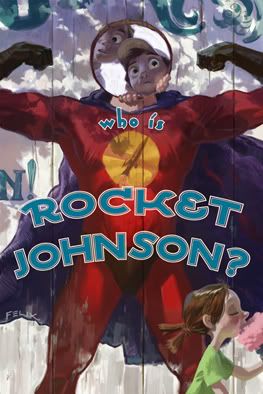
"Who is Rocket Johnson?"

'who Is Rocket Johnson?'

A couple of months ago, as I was stumbling around Disney Animation Studio's third floor story department, story artist Paul Briggs showed me an extracurricular work-in-progress. It was a graphic novel powered by the A-list talent at Disney Feature, everybody from directors John Musker and Mike Gabriel, to veteran story artists Tom Ellery, Mark Kennedy and a host of others.

I got to flip through the pages of the book, and was blown away by the stories and art work, all riffing on the age-old question:

Who is Rocket Johnson?

Paul writes:

"Who is Rocket Johnson?" is a 72 page graphic novel anthology being self-published by Walt Disney Animation Studio's Story Artists and Directors. It's an all-ages book in which every artist answers the question: "Who is Rocket Johnson?" It will be sold exclusively at booth 2302 at the San Diego Comic-Con and is a limited edition of 1,000 copies.

Paul has put a copy on Ebay to help support research in finding a cure for Multiple Sclerosis.

The book is signed by all of the Disney artists in the book and also comes with a set of pins they made special for Comic Con. The proceeds from this book will be donated to the National Multiple Sclerosis Society to fund cutting-edge research, drive change through advocacy, facilitate professional education, and provide programs and services to help people with MS and their families move their lives forward. The auction will end on Jul-10-2008 at 10:30 a.m. pst.

The auction is located here: It is item number: 160256489260 on ebay.com

Please help help the gang at Disney spread the word about the book and the auction.

Cover painted by: Paul Felix

Artists contributing stories: Steve Anderson John Musker Dean Wellins Mike Gabriel Kevin Deters Paul Briggs Tom Ellery Sam Levine Nathan Greno Don Hall Mark Kennedy Aurian Redson Daniel Chong Tron Mai Lawrence Gong Joe Mateo Michael LaBash Chris Ure Bruce Morris Mark Walton

Featuring pin-ups by: Glen Keane ChenYi Chang Byron Howard Arthur Adams

If you have any questions please visit: www.whoisrocketjohnson.com or contact: mail@whoisrocketjohnson.com

Paul Briggs and everybody else thanks you ...

Click here to read entire post

Tuesday, July 01, 2008

Down at the Summer SPA

At Sony Pictures Animation, work continues on Cloudy with a Chance of Meatballs, which is still on the Sony Master Production Calendar. One artist said to me:

"The directors pull it one direction and the execs push it another. Now that we have a new set of people at the top, hopefully that will change ..."

All the crew knows is: We've been working on this sucker a looong time.

I wandered in on a half-dozen staffers looking at color setups for Open Season 2. (The setups looked good to me, but what do I know? I am an old, ex-story guy). "We've moved this whole thing through production in 14 months," said one of the artists around the monitor. "What we need are more Open Seasons! Give us more Open Seasons!"

The first OS, of course, was a mid-range hit, collecting just under $200 million worldwide. This offering, primarily animated in Texas at ReelFX, will be coming to American video stores and overseas theatres in 2009 (thanks for the correction from our astute commenters, and sorry for the original mistake).

It's gonna be SPA's next release, because Cloudy isn't close to the color set up stage.

Adelaide Add On: It looks now like there's a strong possibility that Sony Adelaide's Sit Down, Shut Up won't be moving forward. The writers aren't budging from their position (We need to be WGA ...) and Sony doesn't appear to be changing its recent attitude (We're not going to get sued over this; we're tied to an 839 IATSE contract).

The IA made it clear last week that they expect Sony to honor the agreement in place ... or else.

My position is: this whole fustercluck has been mishandled from the get-go. Sony execs made promises to the SDSU writers they couldn't keep. I mean, it would be nice if someone actually checked before they shot off their mouths, but I keep forgetting this is Hollywood, where the rule is "Talk first and backtrack later. Maybe nobody will notice."

This time, somebody noticed.

And this time, people will lose jobs. Not only are the dozen writers not working, but the forty artistic jobs supporting the show will now be gone. Way to go corporate execs! Your brilliance will not go unrewarded!

Click here to read entire post

The Sea Hawk's 68th Birthday

As long as I'm on an anniversary kick ...

On July 1st, 1940, Michael Curtiz's second-greatest swashbuckler opened for business. (The Adventures of Robin Hood would be the first greatest, but Mike shares that one with the erudite William Keighley).

And yes, The Sea Hawk has almost nothing* to do with animation, but it was a film that mesmerized me when I was nine years old, and captivates me still, so what the hell. To this day, I retain the memory of Errol Flynn slicing candles inside a shadowy palace ...

Like Robin Hood, The Sea Hawk is a glowing testament to the studio system at its pre-World War II pinnacle. Script, casting, art direction, camera work and everything else meshed seamlessly to make cinema art that continues to resonate seven decades after its creation. Which isn't to say that the machinery was always well-oiled:

February 19, 1940

To: T.C. Wright

From: Frank Mattison - unit manager

...Saturday ... the company ... made 16 set-ups ...of the duel. This duel has turned into a matter of a walk. Mr. Daniell is absolutely helpless and his closeup in the duel will be mostly from the elbows up.

Mr. Curtiz was greatly discouraged with his results on Saturday, as well as Friday, but there is nothing we can do as it will be impossible to go back and change to someone else in this part.

The Casting Office and everyone connected with the picture were duly warned of Mr. Daniell's inability to fence long before the picture started, and we knew of him being taken out of a part in Romeo and Juliet because he could not handle a sword. Neverthelss, he is playing the part and it is going to take two more full days to finish the duel at the rate we worked on it Saturday and last Thursday ...

The film, a thinly disguised allegory for the Battle of Britain, was a personal favorite of Winston Churchill. Throughout the 1940s, it made Warner Bros. handsome profits, and continues to generate cash for Time-Warner well into the 21st century. And though writers Seton Miller and Howard Koch (no relation to TAG's current president) squabbled over screen credit, the pair ultimately shared it.

And here's a shocker: nobody connected with the film ever received a penny in residuals. What were all those unions and guilds thinking?

"It's cutlasses now men! We're going to board her!" ...

(*Almost. "Family Guy" did a parody/homage to "Hawk", with Peter Griffin becoming Errol Flynn while Erich Wolfgang Korngold's thunderous score booms on the sound track.)

Click here to read entire post
Site Meter