Monday, June 16, 2008

Double Deck Disney

The fabled Sonora building, home of Disney Television Animation (first floor) and Disney Toons (second floor) is where I whiled away my afternoon. Downstairs, the TVA division (run by the Disney Channel hierarchy) is producing episodes of My Friends Tigger and Pooh, also Mickey's Clubhouse. (Other TVA series are housed on Uncle Walt's Burbank lot.)

I spent the bulk of my time upstairs with the Disney Toon folks ...

Where Diz TVA has utilitarian gray cubicles, polished cement floors, gray-white walls and fluorescent lighting, upstairs is a different world altogether.

The walls are dark green or deep red. There are big George Nelson bubble lamps hovering under the high ceiling, and potted palms along open hallways. In the center of the big space is an open area with fruit and breakfast cereal on kitchen-like counters, big lcd screens on colored walls, clusters of chairs around circular tables.

Basically Toons is a generous helping of upscale, feature animation-type chic plunked down in the industrial area of Glendale, and the whole effect is more ... I donno ... restful than the grey beehive down on the first floor.

Happily, most of Toons's white cubicles (from the tail end of the Sharon M. era) have lost their strange linen roofs that gave them the look of Civil War tents. The artists inside them, most bent over Cintiqs, work on Tinkerbells #1-#3. (The DVD features have more elaborate titles but I'm stumped as to what they are). A board artist told me:

"We had a good first pass screening with Lasseter on Tink Two. We had notes, John had notes, and he has the Brain Trust up north chipping in. We're getting script revisions in a few weeks and we'll have new reels up in late August ..."

In another part of the building, Tink Three is getting worked on, and the glimmerings of Tink the Fourth are on the sunlit horizon: "It's mostly ideas and early story beats now ... no script as yet ..."

And so life continues to hum along, up among the saucer lights and potted palms.

Click here to read entire post

Ethan Ormsby, 1967-2008

Compositor, lighting TD and digital artist Ethan Ormsby passed away on Friday, June 13 at the age of forty. He worked for Digital Domain, Sony ImageWorks, Disney and DreamWorks on such features as Bee Movie, Flushed Away, Over the Hedge, Cursed, The Haunted Mansion, Bad Boys II, The Matrix Reloaded, Spider-Man, Cast Away, Dinosaur, Strange Days and Apollo 13.

A memorial service will be held this Saturday, June 21, at 1 pm, at 10800 Westminster Ave. in Los Angeles. For further details, call (818) 508-1854.

Click here to read entire post

Sunday, June 15, 2008

Panda Hand-Drawn Animation

Kevin's put up a couple of Kung Fu Panda posts, commenting on the hand drawn opening sequence and closing credits. He writes about the end credits:

I knew this character animation was done by DreamWorks animators, and what struck me was that I was able to guess who animated what in about half of them. I guess all those years working together on Prince of Egypt, Road to El Dorado, Sinbad, and Spirit had something to do with that.

I particularly like the Tigress (by my El Dorado supervisor, Rodolphe Guenoden, who choreographed all the fight scenes in the film), Tai Lung (by another superb French animator, Philippe Le Brun), and the Duck (Alessandro Carloni). Simon Otto, who did the Eagle animation in Spirit, got to return to some avian animation with the crane, and everyone did a great job. It’s hard not to miss hand-drawn animation when looking at this stuff.

The post includes a quicktime of the animated portion of the end credits, so it can be stepped through and learned from.

And then Kevin follows with a post about the animated opening:

How about a little equal time for Kung Fu Panda opening sequence hand-drawn goodness?! If you haven’t seen this yet, I recommend you see it on the big screen first ...

A friend sent me a link to the two and a half minute James Baxter-animated opener to KFP, and as a follow-up to the last post ... I’ve turned it into a movie file so you could step through it.

Oh, and for those of you who just love the animation highlighted in the last two posts, word is that DreamWorks has a bunch of very talented animators hard at work on a hand-drawn KFP short (that’s REALLY long from what I hear) that will come out on the Kung Fu Panda DVD.

(Yes, there's animation desks and light boards at DreamWorks animation again. For the visuals and links for Kevin's posts, kindly click on through to Synchrolux.)

Click here to read entire post

Stone Cold Reality

A reporter called today while I had my feet up on the coffee table enjoying Father's Day. The scribe wanted to know about the Sit Down, Shut Up problem. I told her more or less this:

"No problem from where I sit. The Animation Guild has had a contract with Sony Adelaide for years. Writers on SDSU started working under that contract, decided they didn't like the deal, and split. I've got no problem with them exiting, nor that they use the exit to muscle themselves a better deal. That's Hollywood.

"The only thing that gripes me is the WGA issuing a comment about how 'These are WGA writers and they want a WGA contract,' the implication being that there is some rule which says the WGA covers primetime animation exclusively, and that script writers who have previously worked under Writers Guild contracts get the WGA terms and conditions on their next animated show because they desire it.

But sorry. That rule only applies if the Writers Guild holds contracts covering the work. And in this case it doesn't. It's neither fair nor unfair that the WGA reps no animation writers at Sony, it's simply reality."

Reality, what a concept. Six months ago it worked for the DGA, WGA and AFTRA in leveraging better deals from the AMPTP, because there was the obvious reality of these writers being out on strike, halting the work flow.

But sometimes reality cuts the other way:

With homevideo revenue flat, rising gas prices and a shaky economy, studios are under increasing pressure from corporate parents to trim costs — and they find themselves able to do so with production scarce because of the one-two punch of a writers strike and a de-facto actors strike.

They have leverage to make deals that lessen their risk and get their money back faster in a project’s revenue stream ...

Studios started to gain an upper hand before Hollywood’s labor problems and the economy got shaky. The change came after several studios were ready to cancel projects if talent didn’t re-draw signed deals. Tom Cruise at one point controlled more than 30% of the first-dollar gross on a “Mission: Impossible” film, with the understanding that any gross points for a director or other stars would come out of that pot. So it was telling when J.J. Abrams got no gross deal for “Mission: Impossible 3.” Paramount was ready to scrap the project until the terms were redefined ...

And the actuality of How Things Are isn't just crashing in on the Big Money players. There's also a new dynamic for journey writers and directors:

... "[T]here are 50 to 100 writers that are still getting the deals they were always getting," says J.C. Spink of Benderspink management-production firm. "For everyone else, it is getting harder, harder, harder."

A top manager-producer says studios invoke every reason except the recent strike for their tough negotiating stance. "They say things like, 'It's a new environment.' Or 'The landscape's different,' " he says.

Whatever the reason, midlevel scribes repped by his firm have been especially hard hit.

"The middle guys are getting killed," he says. "I had one guy who makes $800,000 --an established guy -- and they wouldn't go above $250,000 for him."

Worried about paying his mortgage and the prospect of another stoppage, the scribe took the deal, accepting a fee he hadn't taken in 10 years ...

(Must be some mortgage.)

Anybody who works below the line (you know, folks who do editing, camera, makeup, sound, animated cartoons?) knows that times are not flush and the conglomerates are playing hardball with semi-lethal steel pellets. Last week a rep for the cinematographer's guild told me:

"Man, things are tough out there. Boston Legal's cut a hundred thousand dollars out of their weekly-episode budget, and most of that is coming out of the hides of every person who works on set ..."

(As he talked, I thought about the cutbacks at Warner Bros. Animation and Cartoon Network, about the project-to-project mentality at some of the feature shops where you're gone five minutes after the rendering of your last scene.)

That's the problem with reality. Sometimes it works for you, but lots of other times it works against you.

Add On: Ms. Finke updates the tribulations of Sit Down, Shut Up writers. If her post is accurate (some are, some aren't), I hope Sony and the writers can dodge litigation and work it out.

I still find it astounding that nobody knew TAG had a contract with Adelaide, but less astounding that commenters judge the Animation Guild to be Satan's junior partner. (It sure felt like we were doing the Lord's work when we struggled to organize the place in 1996).

Click here to read entire post

Saturday, June 14, 2008

Bulletproofing Retirement

Another short side-trip away from Animationland.

During the last few months, longtime 401(k) participants have griped to me:

.

"I hate to frigging look at my 401(k) accounts these days. Because everytime I go online or open up a statement, I find out my stock funds have gone down again ..."

I usually respond that those things happen in a sustained down market, so maybe they should look at their crappy returns less and just wade through the bad times dollar-cost averaging ... or maybe rebalance to a more conservative allocation ... or look at the swooning markets as "good buying opportunities."

For some reason, not everybody is reassured by my answers. When equity markets are going south, nerves get raw and hearts grow heavy.

And apparently older investors have similar issues about retirement bankrolls, because today the Wall Street Journey offered up a pithy article regarding various strategies that folks can use when stock values in their mutual fund accounts keep melting ...

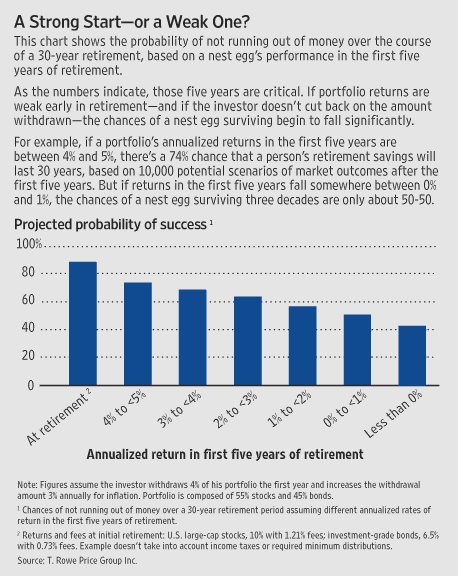
... [F]inancial planners and researchers are warning clients that the timing of retirement -- in other words, the luck of the draw -- will largely determine how a nest egg will fare in the future. If you're fortunate enough to retire at the beginning of a strong bull market, such as the early 1990s, your savings might easily last for three decades. If you're unlucky enough to retire at the start of a bear market or recession -- say, early 2000 or late 2007 -- you could find yourself struggling financially for years to come.

Seems pretty obvious now, though maybe not so much back in 1999 when 401(k) participants were exulting over their fifty percent returns in their Plan's tech funds. Nine years further on, most people are less giddy and more nauseous over the ups and down of the market. Happily, the Journal gets down to useful specifics:

...[I]f you're withdrawing more than 10% of your nest egg's value each year, "never in history" has a portfolio lasted more than 19 years in that situation, says Jim Otar, an engineer, author and certified financial planner in Thornhill, Ontario. To find out the maximum remaining years for your savings, you would divide 160 by your withdrawal rate. To find out the minimum remaining years, divide 80 by the withdrawal rate. So, if your withdrawal rate is 12%, you'd have six to 13 years of savings left.

If you come up with ominous answers using any of these gauges, Mr. Otar recommends buying an annuity with all or part of your assets. What portion of your savings should go into an annuity? Probably more than you think. Although financial planners routinely suggest that retirees without pensions annuitize one-quarter or so of their savings to cover basic living costs, you probably need to annuitize closer to 100% of your savings if you're in danger of running out of money in a couple of decades, Mr. Otar says.

I'm not a huge proponent of annuities. If you work under the Motion Picture Industry Pension Plan, you're already locked into a monthly retirement check under The Defined Benefit part of the Plan. But I understand how everybody's retirement needs are different, and how managing investment accounts is not everyone's bag. So maybe another annuity is the right move for you.

But different industry workers have different issues. For the camera person or editor who's been gray-listed, there's the challenge of finding gainful employment until pension benefits and Social Security kick in. For the younger animation artist who's down-sized because of technological change, there's the question of whether to retrain ... or go into another field altogether where hard-won artistic chops can be used.

There's no one-size-fits-all solution, but most people will be forced at some point to come up with answers. The sooner you and I focus on what the questions are, the better off we'll be.

(Of course, one simple solution is to begin retirement in the first year of a two-decades-long bull market. When you figure out how to do that, drop me a line.)

Click here to read entire post

Incredible B.O.

The Big Panda drops to third as yet another comic book hero steps to the plate and mashes one out of the park.

The Incredible Hulk replicates KFP's performance from a week ago (and throws in an extra million) claiming $21,030,000.

Meanwhile, The Happening delivers a Friday gross of $12.8 million -- while the big Panda winds up with $10,000,000 and a total of $93,677,000 in its eighth day of release ...

Zohan collects $5,425,000 in fourth place and Indiana Jones (#5) snares $3,365,000 for a total of $265,432,000 after 23 days in your friendly neighborhood AMCs.

Of the Top Ten domestic box office earners, four are now in triple digits (with a fifth due momentarily).

Add On: To no one's surprise, the Hulkster lands at the top of the heap. (But note: it's Friday opening was better than KFP and it's weekend total was $5,500,000 under ... at $54.5 million.)

And Panda moves past The Happening to claim the second spot on the charts with $34.2 million. It's domestic total after two weekends stands at $118 million.)

The Happening fades a bit from its robust Friday opening and collects $30.5 million, while Sandler's Zohan drops farther than any other Top Tenster (57.4%) to take $16.4 million and a current cume of $68.7 million.

Indiana Jones slides 40.6%, rakes in $13.5 million and now sees $275.3 million bulging from its ruck sack.

Click here to read entire post

Friday, June 13, 2008

The Hat Walk

I finished out the week meandering through the Disney Animation Studio, otherwise known as the "hat building" ...

Some Bolt crew members are nearing the end of their production gigs, while others are still deep into overtime.

A few months back a c.g. artist told me, "I don't see how the picture can make a November release, there's just way too much picture to get done, and way too narrow a pipeline,"but today several folks said:

"Oh, we're burning through shots. The studio will make the deadline. It always does."

But everyone is pretty solidly glued to the flat screens and keyboards, toiling away.

"One nice thing. There's overtime pay in abundance."

Click here to read entire post

A walk-a-thon for Ric Quiroz

Click the thumbnail above for the Walk-A-Thon flyer

(from Laura Quiroz)

Hi Everyone,

Some of you may not be aware that Ric Quiroz and I are in the fight of our lives. He was diagnosed with Lou Gehrig's disease (ALS) on Oct 8th of last year. Since then our lives have changed and my main focus has been to find a way to fight back.

I have decided to create an event in Ric's name and have all monies donated to MDA for ALS research. This is being done in conjunction with MDA. If you are in the area come out and join us for this event. There will be food, entertainment, and fun, however you don't have to come to the event to donate. You can donate on the participant page if you would rather do that.

MDA has been a godsend and helped us a lot and continues to do so. This organization does what they say they do. All monies will go for research so if you can help us reach our goal that would be great, however, if you can't donate your prayers are always welcomed...

Love you all, Laura and Ric

Click here for Ric's participant page

Click here to read entire post

Sit Down, Shut Up?

Just to be clear, a commenter's tip-off below was the first time I heard about this:

... 14 WGA writers and writer-producers on Sony's newly ordered TV animated series Sit Down, Shut Up! have walked off the show scheduled to air in primetime on Fox this fall. It's a dispute over who has jurisdiction over the writing staff: the WGA or IATSE. The problem is that all the Fox TV animated shows now being broadcast on that network are covered under the WGA contract, so the writers assumed their new show would be as well.

If there's a dispute, it's between Sony and the writers to whom (apparently) Sony has been selling a bill of goods for the last six months.

Here's a clue: if you "assume" you're under this or that contract, you have a problem going in, because it's good professional practice to get a little something about your status in writing. SDSU is -- to the best of my knowledge -- a Sony enterprise. And the Animation Guild has owned a contract with Sony Adelaide (which does Sony's television animation) for a dozen years. We organized the joint, collected rep cards, filed a petition with the National Labor Relations Board, the whole nine yards, in the middle nineties.

Writers were part of the contract then, they're part of the contract now. And as far as I know, the WGA has no contracts in place with Sony for animation writers. (I could be wrong, of course. I get around so little. The WGA did have a contract for wordsmiths on the Sony-produced prime-time animated series Dilbert in 1998 ... because back then Sony placed the writers in a separate, non-Animation Guild company which the WGA ultimately organized. Bully for the WGA.)

But it seems with this current writing crew, that isn't the case. If they're housed at Sony Adelaide, then they're under a TAG/IATSE contract (horror of horrors). If Ms. Finke's article is correct and these scribes haven't signed deals, then they're certainly free to walk out from under that contract, and more power to them. No point in working someplace you're not happy.

Just please don't drag us into a fight between Sony and the WGA. This dispute is between corporate execs in Culver City who apparently misinformed some new hires on an animated television show. TAG ain't involved.

Add On: Whoops. Apparently I misspoke. It seems -- if the Hollywood Reporter is to be believed -- that the writers and their agents knew which union they were working under:

"The producer, Adelaide Prods., has been a signatory to the IATSE bargaining agreement for at least 10 years, and has been producing animated programming under that agreement," Sony said in a statement. "All of the deals made with the writers were specifically negotiated with their agents specifying that this program would be covered by the IATSE bargaining agreement."

Other industry sources also confirmed that the writers and the their reps had been informed early in the process that the show will be covered by IATSE, not WGA.

But there are stout hearts at the WGA:

"The writers of 'Sit Down, Shut Up' are Writers Guild members, and they want the show to be covered by a WGA contract," the WGA said in a statement. "We have been in conversations with Sony, and hope this will be settled soon."

Uh, there's nothing to settle. The Animation Guild has a long-standing collective bargaining agreement representing writers and storyboard artists at Sony Adelaide. The WGA doesn't.

Despite Ms. Finke's assertion that TAG all of a sudden waltzed in and snatched buttered bread out of unsuspecting writers' mouths.

(Variety gives its version of events here.)

Click here to read entire post

Thursday, June 12, 2008

Seeing Starz

I hopped over to Starz/Film Roman on business today. While there, I took the opportunity to amble through the rows of cubicles assigned to "The Simpsons," many of which remain empty ...

I found a few yellow family artists scattered around and about. One hearty soul who told me:

"We're working on show number 22, last of the season. We're supposed to be finished by June 25th, then back on July 2nd for revisions. Hopefully after that there'll be new shows to swing over to ..."

Down the next aisle, a few designers were in their first week of employment working on Show #1 for the upcoming round ... which apparently sports two less episodes than usual. An artist told me:

"I was off work two and a half months, and I was lucky. Others were off longer. I like to think we're getting back into a regular flow again."

One designer said he was glad the actors had signed a new deal. "It locks them in for like, four years. That's good. And I hear the writers are trying to get as many shows ready as they can. The directors are doing table reads around here this week."

I said that sounded like a fine idea, since if SAG goes out next month, the actors on "The Simpsons" will be hitting the bricks, new deal or not. He gave me a concerned look.

"They'd still strike? Even with the big new contract?"

"Afraid so," I said. "SAG doesn't have a deal yet. And the voice actors aren't going to buck the Screen Actors Guild. Fox had better record shows before SAG's contract runs out July 1st. Otherwise, there won't be much work stockpiled around here, I don't think."

He looked thoughtful at this.

Click here to read entire post

Summertime Links

Linkage you can use ... if you're focussed on toonage.

The Smurfs are soon coming (maybe) to CGI land. Me, I'm a man of simple ... and retro ... tastes. I think we should start a letter-writing campaign to get DreamWorks to make a 3-D feature starring Quickdraw McGraw.

... the genesis of the current project began during a holiday conversation with Sony Pictures Entertainment chairman-CEO Michael Lynton, who grew up with "Les Schtroumpfs" in the Netherlands. "He relished them as I do and suggested that it should be a live-action/CG film," he said. "(Studio topper) Amy (Pascal) felt equally that there was potentially a series of films in the making."

Well, there was nine years worth of teevee entertainment. Why not "a series of films"? ...

The scotsman gives us a profile of sound designer Ben Burtt, who has worked on Indiana Jones, a host of Star Wars epics... and now Wall-E:

Burtt has spent much of the past two years holed up on his own in a concrete bunker at Pixar's studios, recording the sounds made by toothbrushes, household appliances, miniature jet planes, army tanks and his own voice. "I went to a newspaper printer overnight and recorded all the gigantic scanners and presses," he says. "There are sounds in the movie I recorded when I was a kid from my grandfather's shortwave radio. I would tune it between stations and tape the weird electronic noises. I've used something from those original recordings in every science-fiction movie I've worked on."

And the Boston Globe rolls out a feature article on the directors of K.F. Panda, John Stevenson and Mark Osborne:

... "People don't really understand how much directing there is in an animated film. . . . The whole thing took four years," Osborne said. "We have to have meetings about every issue. What level is the water? What is the shape of the bottle? What is the carpet like? Do we show the dent in the carpet?"

"It's very Zen," Stevenson said ...

Daniel Holloway at the Huffington Post as an interesting think-piece on the state of animation, hand-drawn and otherwise:

The argument against hand-drawn animation is based not on financial realities, but on the poor performance of a few features made back when Disney was gnawing off its own animation arm ...

Since then, the few films made with American pens and ink haven't exactly suffered. The Simpsons Movie earned $183 million at the domestic box office, making it the 17th highest-grossing animated movie in U.S. history. Kid-friendly Curious George earned a respectable $58 million in 2006, a hair less than CGI Oscar nominee Surf's Up would earn a year later.

Meanwhile, foreign audiences continue to throw down their favorable currencies to see old-school cartoons. Japanese import Howl's Moving Castle earned $230 million internationally -- more than Bee Movie, Happy Feet, Ice Age or Cars ...

ASIFA Hollywood's Archives has some dandy stuff up the last couple of days. The Archives' Ren and Stimpy storyboards are fun, also Boris Artzybasheff's political artwork centered on Adolph and his shills, along with the implements of war.

This hasn't yet come out as a paperback at Barnes and Noble, but here is the condensed version of DreamWorks for Dummies:

* 1994: Steven Spielberg founded DreamWorks with Jeffrey Katzenberg, and David Geffen (forming the SKG present on the bottom of the DreamWorks logo)

* Next fourteen years, Spielberg directed eight films under his new studio (Amistad-Munich

* DreamWorks won three consecutive best picture Academy Awards starting in 1999 with American Beauty (followed by Gladiator and A Beautiful Mind).

* [DreamWorks founders] sell the studio to Viacom, the parent company of Paramount Pictures, in February 2006. The deal was valued at approximately $1.6 billion ...

* The founders became increasingly unhappy about their arrangement with Paramount, believing that Viacom was not sufficiently appreciative of their contributions.

* Viacom announced it would not renew DreamWorks’ contract.

* On June 10th 2008 Spielberg announced that he hopes to raise more than $1 billion in third-party financing to reinvent DreamWorks as an independent company ...

While we're on the subject of DreamWorks, the Motley Fool details some of the collateral benefits to other companies of KFP's gold-plated opening:

... Exhibitors like Regal (NYSE: RGC) and Cinemark (NYSE: CNK) are tickled to have a family-friendly flick to draw young patrons to the movie house. Disney's (NYSE: DIS) The Chronicles of Narnia: Prince Caspian could have been that film, but it has stumbled badly after a respectable opening last month. Disney has a cleaner shot with Wall-E later this month, but the Jack Black-voiced panda will do the trick until it's time to pass the baton.

Another big winner is IMAX (Nasdaq: IMAX). The big-screen-experience enabler has a deal in place with DreamWorks Animation. After a string of duds in The Spiderwick Chronicles, Shine a Light, and Speed Racer getting the IMAX makeover treatment, IMAX exhibitors finally have a hit that patrons will welcome paying a premium to see ...

We'll end with an animation story from the other side of the world. Thailand is ready to sell its first 3-D animated teevee show to the wider world:

Shellhut Entertainment Co, a local animation producer, aims to launch Thailand's first 3D animated TV series Shelldon, in worldwide markets, hoping to earn at least 500 million baht within three to five years.

Shelldon features the adventures and friendships of Shelldon, a shell hero and his marine friends ...

After eight years of production with a total investment of 83 million baht, the Thai animation series is scheduled to be launched first in Thailand on Channel 3 in October.

This production appears to be Thailand's answer to SpongeBob Squarepants. For those of you living on the outskirts of Barstow, one baht equals three cents.

Add On: Deadbolt.com proves that all it takes is a keyboard, a computer and a modum to be an expert. DB's list of "Ten Greatest CGI films" is nothing if not ... ahm ... eclectic:

8. The Polar Express

...landing completely on the other end of the literary spectrum from Beowulf, we have The Polar Express, Robert Zemeckis' adaptation of Chris Van Allsburg's classic children's picture book. Before you say anything, yes, the dead-eyed little Amtrak passengers totally freaked us out upon our first viewing, but grab any five-year-old in America, mention the movie, and watch their eyes light up as they run to grab you their Polar Express DVD, train set, and pop-up book, all while screaming "Hot Chocolate, oh, Hot Chocolate!" to the high heavens ...

Yes. But is it the 8th greatest CGI feature of all time? Now ... let's all sprint hard to the oncoming weekend and make our Mommies proud

Click here to read entire post

Wednesday, June 11, 2008

Counterpoint on the Blinks

And Kevin writes:

I’ve suggested a couple of times that CG animators often don’t use enough blinks and interesting blink patterns to show what their characters are thinking and feeling, and in my last post I put up a live-action clip showing how much a good human actor can do with blinks and half blinks and eye flutters. The great Michael Cain gives a counter-point, suggesting that actors NOT blink:

point is that blinking makes a character look weak or hesitant (I’m sorry if some of you hear “And I don’t blink, and I keep on going, and I don’t blink . . .” in your nightmares tonight!). Now, given the typical “Michael Cain” character, he’s absolutely correct. People tend to blink much less when they’re focused and/or angry. That’s what his ‘trick’ unconsciously conveys to the audience: “I’m a guy you don’t want to mess with.”

He once explained in an interview: If you want to appear strong, never blink. Marlene Dietrich told me that. If you want to appear weak and funny, blink all the time. Hugh Grant never stops blinking.

I think this oversimplifies things, but take a good look at the last few seconds of his clip above. See how effective that flurry of blinks is in conveying someone who ISN’T so sure of themselves, who ISN’T angry and focused? It’s like he’s a different character! The point is NOT that fewer blinks are better — the point is to understand what your character is feeling, experiencing, and portraying, and then use blink patterns and eye darts to help convey THAT to your audience ...

(For the rest of Kevin's post, get ye to Synchrolux).

Click here to read entire post

What Else I Have Learned

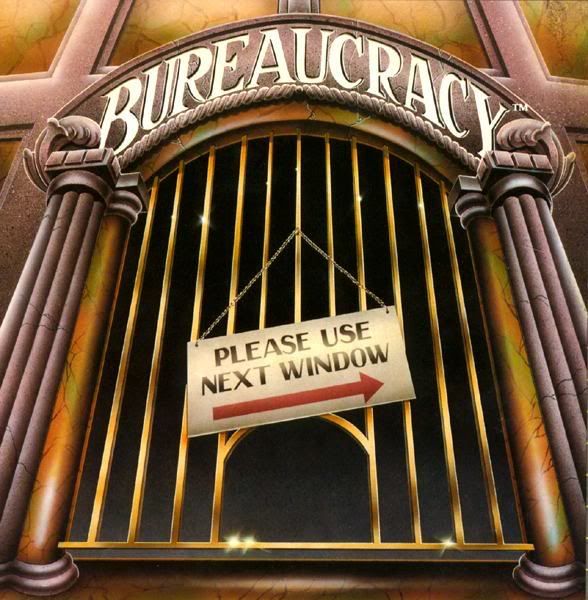
1) Bureaucracies grow.

Don't think I'm talking about evil old government. Corporate bureaucracies metastasize like fast-growing cancers when money floods in after box office hits. Executives begin empire building, and all of a sudden there are production managers, production assistants, coordinators, assistant accountants where there used to be one guy handing out supplies.

That department that used to get along with one p.a.? Now it has three, and a production coordinator, and the main tasks they make for themselves -- and the creatives -- are setting up meetings that nobody really needs ...

2) When you're laid off or turned down for a job, seldom will you get a straight answer regarding why.

This is because a) Nobody wants to be the bearer of bad but truthful news ("Your portfolio made me vomit.") and nobody wants to be the villain (the white lie of "Hey, I liked your work, and if the decision was up to me, you'd be on staff ..." is much easier).

True story: Last week a I heard a supervisor's description of an ex-employee:

"He's the king of Never-Coming-Back-Here."

Yeowch. But the ex-employee will never hear this description, because it's overly frank, and letting somebody know exactly where he stands (in the dog doo pit up to his neck) will only make the supervisor's life more complicated ... if those words get back to the ex.

So obfuscation prevails.

3) The higher the perceived stakes, the more robust the political in-fighting.

When I was in the studios, the maneuvering for position and efforts to grow influence were never ending (see number 1 above).

When I was teaching high and middle school, there was way less of this (not zero, but less). Everybody was on a pay schedule, you didn't get a promotion for climbing over somebody's back, so less people did it.

But when you listen to Ken Anderson mutter: "Wolfgang Reitherman ... he's out to control everything ..." you know you're in the midst of a battle over turf.

4) Good ain't forever and bad ain't for good.

After you've been in the animation work force awhile, you will understand what this means. The length of time it takes to learn this lesson depends on when you came into the cartoon biz.

If you came in, say, in 1990, then you most likely had six years of believing that good was forever ... because the working world of cartoons was continually expanding, and salaries were going up, up, up.

After 1996? Not so much. You entered the animation business, you knew from the get-go that your work assignment didn't stretch off into eternity. It's always good to keep 4) in mind, and not get too emotionally attached to any particular workplace, for sooner and occasionally later, that workplace will issue you a pink slip and you'll be taking your belongings out to the car in a cardboard box.

Click here to read entire post

Tuesday, June 10, 2008

Panda Offshore

We all know that KFP walloped the competition stateside, but how did it do far away from the fruited plain?.

Par kicked up a socko offshore launch for "Kung Fu Panda" with $20.7 million at 1,398 -- a sterling $14,807 per location -- in only nine markets with each posting the top result for a DreamWorks animated pic. The booming Russian market led the way with $9.2 million, 158% better than "Ratatouille," followed by $7.5 million in South Korea, more than triple "Ratatouille."

"Panda" also set records in Singapore, Malaysia and the Philippines for the best three-day animated launch ever, underlining the strong offshore appeal of CGI animated titles. Par's holding back the pic in Western Europe until July to take advantage of holidays and the start of vacations ...

Par isn't stupid. It knows a big moneymaker when it sees one.

Jeffrey and his partners have themselves another franchise, which is fine by me. Movies that inspire sequels also inspire lots of work for animation artists.

Click here to read entire post

Animators of the World ... Unite!

My father started at Walt Disney Productions in 1938 at $15 per week. Thirty-eight years later, I began work in the Disney feature story department at rate of $130. When I left a decade later (1986) I was up to a whopping $40,000 per year.

And in 2008 there is this:

The Japan Animation Creators Association (JAniCA) have set itself up as an unlimited liability intermediary corporation this week to continue its efforts in improving work conditions in the Japanese animation industry.

... 90% of the animators and directors are freelancers, and those who have trouble making ends meet are expected to face increasing hardships as they grow older. In particular, there are veteran creators in their 40s and 50s who are getting by on ... $30,000 (US) a year ...

Roll that figure around on the tip of your tongue a minute. That's $600/week ... $15/hour. That wage wouldn't buy you much of a life style in Los Angeles, and Tokyo's considerably more expensive than L.A.

But it gets scarier:

... One 59-year-old had to cut back due to deteriorating physical health, and now subsists on $1,000 (US) a month. Some of the 59-year-old animator's former colleagues now receive public assistance or are now homeless ...

I'm in my fifties. I read that and think, There but for the Grace of God ... As bad as some situations are here in the Los Angeles animation community, they don't hold a guttering candle to the work realities faced by animation artists in Japan.

Click here to read entire post

Monday, June 09, 2008

Actors Fight

The N.Y. Times notes that, despite oncoming summer, things aren't sunny in Tinseltown:.

Leaders of the Screen Actors Guild publicly declared war on a fellow actors’ union at a Monday rally here, increasing the likelihood of new labor strife in an entertainment industry still recovering from a writers’ strike that ended just four months ago ...

“We are engaged in the battle of our lives,” Mr. Rosenberg told a group that appeared to number several hundred and included the actors Ed Asner, Keith Carradine, Justine Bateman and Joely Fisher. “It is essential,” he added, “that we vote down that Aftra deal.”..

Judging from the above, these folks seem determined to gallop into another strike, which would help wreck the Motion Picture Industry Pension and Health Plan real good, especially if it went on for as long as the actors' labor action against commercial producers in 2000.

Wiser heads than mine think a second strike will never happen. When I asked a couple of IA bigwigs at the District Two convention if the new AFTRA agreement would get ratified, they assured me it would. This paragraph from the Times hints that they might be correct:

... Monday’s demonstration was relatively small compared with the mass pickets that began the writers’ strike, and fell noticeably short of the demonstrations that accompanied a strike by both SAG and Aftra against commercials producers in 2000.

So. If the AFTRA contract goes down to defeat, we've got big trouble. If it gets approved, less trouble.

SAG's officers seem to forget that "Pattern Bargaining" isn't just some weird theory, but a Hollywood way of life.

Click here to read entire post

DreamWorks Animation, the Weekend After

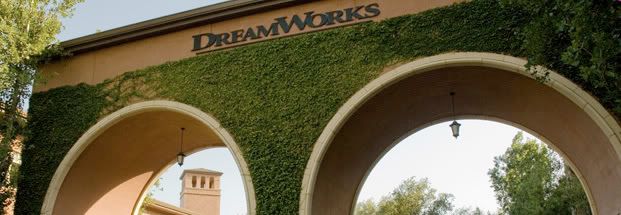
This day I ambled through DreamWorks arched entrance, wondering how high the staff's mood would be after Panda's sixty million dollar weekend.

I'm pleased to report the mood was good. (Alert the media.)

"We had a pre-opening party here Friday, with speeches and refreshments. The company was pretty confident of big numbers, since some early returns overseas were up there. And everybody kinda thought it would be doing well, because we knew what we had ..."

So spirits are high. People said they were elated to have another hit, that it was lots better than, you know, the alternative. A layout artist said, "I want every animated feature this year to do well, Horton, Wall-E, Panda, all of them." Another staffer told me:

"They used to do the release parties the Monday after the opening weekend, but they stopped that. Some of the pictures tanked, and then nobody felt like celebrating. A few years ago they had balloons set up for a party, but the picture didn't do well. I remember walking through and seeing them taking down the party balloons from the ceiling before the party happened. There were people up on ladders popping them." ...

No balloons getting popped today, I can tell you. Nothing in sight but big banners hanging in the commissary celebrating KFP. The only disgruntlement I came across was in the big corner building, where noisy construction work expanding the studio gets on some artists' nerves.

Click here to read entire post

"You can't do it unless you organize"

TAG Representation Card
Click on the thumbnail for a PDF of TAG's rep card. Copy, hand out, repeat until done.

Organizing is the bread-and-butter of labor unions. They organize, they live (and often thrive). They don't, they ultimately die ... Just like companies that don't innovate and re-invent themselves.

TAG has done a lot of organizing over the years, and we're still here after fifty-six years. (The rep card we use in organizing drives is shown up on top. For full effect, follow the instructions provided.)

Organizing is often painful, but it's oh-so-necessary. Show me a 'toon studio that is "non signator", and I'll show you a studio that pays lower wages and benefits than its union counter parts. At the just-concluded District Two Convention, one of the larger committees is about organizing. Its report:

Mr. Chairman, the organizing committee met for two hours and discussed many aspects of organizing, both the challenges ... and possible solutions.

Evans Webb of Local 800 (The Art Directors Guild) pointed out that New Media, particulalry the Game Industry, has gained a larger share of the entertinament dollar. It now grosses $14.5 billion a year compared to the movie industry's $9.5 billion, and we need to work to bring game companies under union contracts.

Andrea Pelous of Local 784 said that educating new members was of high importance as her local (costumers) pushed for new contracts in the Bay Area. And Bruce Doering of the Cinematographers Guild was now hosting training seminars for members nationwide.

Robert E. Moorett of Local 705 stressed that bringing new, younger members into his unions as the old-timers aged and retired (as many are doing now) was crucial.

Edmund Wirth of Local 80 (Grips) told how Local 80 had to threaten disciplinary action against a member to get the member to assist in organizing a film shooting in Oregon.

Kevin Koch of the Animation Guild (Local 839) noted that it's important for members to be educated about union pension and health benefits, since those things provide motivatio for organizing.

The committee recommended the following actions:

1) That unions and guild continually educate members about pension, health and other union benefits.

2) That unions make it a continuing priority to reach out to members and internally organize the individuals already in membership.

3) That unions and guilds use members working as leads on non-union showas and in non-union studios to aid in organizing drives.

4) That unions and guilds offer incentives -- both positive and negative -- to members to a) provide information about non-union work in that union's jurisdiction, and b) assist in organizing that work.

5) That unions prioritize organizing efforts, since organizing is the life blood of any labor organization.

This is the committee's report, Mr. Chairman, and I respectfully move for acceptance ...

Which it was.

Kevin and I often get told, "Yeah, it'd be kinda nice if this place went union, but why should we stick our necks out?" The answer is two-fold:

First off, nobody has to stick their necks out very far. That rep card up top, when signed by a studio employee, is only seen by the Federal Guvmint (specifically, people at the National Labor Relations Board) and people here at the Animation Guild are the only other folks who see the card. Management at the studio never sees the card. And if it gets to a studio-wide vote over "going union", your ballot is secret.

Second off, the more studios that come under a union contract, the more leverage you have over wages (you're negotiating from an already-established floor of weekly salary). And benefits. And vacation.

Seems elementary to us.

Click here to read entire post

Sunday, June 08, 2008

Nikki's Snark

The Nikster has taken time away from denigrating AFTRA to throw a little snark animation's way:

Kung Fu Panda's success just goes to show that DreamWorks Animations' strategy of making 90-minute toons is shrewd: not only can theaters get in a lot of screenings, but both parents and offspring can sit through anything that short without too much squirming. (Actually, this panda received rave reviews.) Plus, I have a pet theory: almost any animated film featuring characters with fur does better at the box office.

Ms. Finke yields in her breath-taking ignorance to no one. And not just about animation, but labor issues.

(Thanks to the commenter below who referred to this.)

Click here to read entire post

More on Eye Movements in animation

Kevin continues his series focused on the eyes over at SynchroLux. He begins:

This will be a shorter post than that on Vanilla Blinks, not because there’s less to say, but because there’s too much. As we saw, there’s a lot of quantifiable information about the generic, spontaneous blinks that we do all the time. Imagine how much could be written about variations on standard blinks!

But instead of trying to write a book, I’m going to point a few things out, post some samples, and leave it to the reader to study the varieties of blink types is the rich reference material we’re surrounded by every day (like, real life, movies, TV, etc.).

There are three basic blink categories: spontaneous, voluntary, and reflex. Hopefully those categories are self-explanatory. Eye Movements 4 was about spontaneous blinks, but regardless of their type, all blinks exhibit a similar pattern. For example, the upper lid accounts for virtually all of the closure, and the closing phase is always much faster than the opening phase. The overall duration of a blink is also very similar among all three types, though spontaneous blinks tend to last slightly longer.

It’s really in the pattern of blinks and blink variants that we see real variety. . .

You can read the full post here, and also view a quicktime of a sequence from Truffaut's The 400 Blows that illustrates some of the ideas.

Click here to read entire post
Site Meter