Friday, June 08, 2007

The Links of June

Who says show biz is only for the young. Octagenerian Stan Lee, still trucking right along, signs a new deal with the Mouse House:

Walt Disney Studios has signed a multiyear, first-look deal with legendary comics creator Stan Lee and his production company, POW! Entertainment.

Specifics were not disclosed, but Lee and his production company will develop and produce all forms of entertainment for various platforms.

"The big thing is we're trying to do projects that are high concept, stories that will lend themselves to franchises," said Lee, whose POW! stands for Purveyors of Wonder.

Lee is the co-creator of many of the most popular Marvel Comics superheroes that have gone on to starring roles in today's tentpole movie marketplace, from Spider-Man to the Fantastic Four to the Hulk.

Ah. So that's why Stan is still a hot commodity. He makes the studios big mon-eee.

And since Sony Pictures is flogging surfing penguins this week, we'll link to the second Surf's Up article in as many days:

[Surf's Up] has taken five years to make, because the two most difficult things for computers to re-create are water and feathers. "Surf's Up" has a lot of both. It's also lucky enough to have a new, young star doing the lead voice.

Shia LaBeouf has a surprise hit, "Disturbia," still selling tickets. He also is in the eagerly awaited "Transformers," due to land July 3, and has been signed for the next Indiana Jones flick. Here, he supplies the voice of Cody Maverick, an undersized Rockhopper penguin who travels from Shiverpool, Antarctica, to Pen Gu Island to compete in the 10th annual Biz Z Memorial Surf-Off.

Sony, not taking any chances, has launched one of the most extensive marketing campaigns in recent moviedom, even out-webbing Spider-Man. Everyone and everything from Old Navy to McDonald's Happy Meals and Baskin-Robbins' Splish Splash sherbet is hawking the flick.

The San Francisco Bay Guardian summarizes a cartoon festival that purports to be the UN-Disney celebration of animation:

...For more than 25 years, Portland, Ore., film archivist, historian, professor, and writer Dennis Nyback has been searching for rare films in the catalog The Big Reel as well as in thrift stores and flea markets. "F@ck Mickey Mouse" is the title of a 16mm film program Nyback has assembled to showcase, as he puts it, "rare cartoon precursors that beat Disney to the punch, imitators that ripped him off, and parodies that made vicious fun of some of Disney's greatest animation shorts."

Forbes Magazine gives an overview of the burgeoning visual effects industry, and how viz effx permeate films of every genre:

Even films that don't seem effects-driven, like romantic comedies and period dramas, rely on as many as 400 effects shots, most of which are "invisible effects" that might be introduced to a commonplace scene, such as the addition of weather effects and backdrops. In Time Warner's (nyse: TWX - news - people ) Blood Diamond, the visual effects team placed actors in dozens of off-limits locations, such as Sierra Leone, enhanced spilled blood, altered out-of-focus shots and made parked vehicles drive.

"There isn't a film without this type of effects," says Okun. "Visual effects have matured to the point where they are no longer a special event. We're just one more tool every director uses."

And some films are now purely digital, such as the animated features that come from Disney's (nyse: DIS - news - people ) Pixar and DreamWorks Animation, which made Shrek the Third. The company used two "render farms"--giant rooms filled with nothing but racks of servers with heavy-duty processors--to complete the film.

And we'll throw in reviews of two dvd animation releases -- one new and one old -- in case you want to know about some of Disney's old Silly Symphony shorts or Starz Media/Anchor Bay's new Hell Boy release...

Fastcompany.com has an interesting take on why and how Disney has become even more of a power-house over the last two years. Title of the piece? "The Apple-ization of Disney"...

A very big, very established company. The Walt Disney Co. has more than 133,000 employees around the world and 84 years of tradition. It has rules. But with digital technology changing the way the once-untouchable media giants create, distribute, and profit from their content, Disney needs people to break some rules and blaze new paths into the future...

Since Bob Iger replaced the brainy but embattled Michael Eisner as CEO in October 2005, Disney has managed to keep the theatrics on TV and movie screens and out of the boardroom and the headlines. The crushing financials, the no-confidence board vote that booted Eisner off the throne, the threat of a shareholder suit--they seem like ancient history now that the company is "firing on all cylinders," as David Miller, an analyst with Sanders Morris Harris, puts it.

The stock price has climbed more than 50% since Iger took over. Analysts are quick to split the credit: Eisner invested wisely; Iger has a more effective management style. Last year, Disney generated a record $34 billion in revenue (up 7% from the previous year) from an impressive string of hits including Pirates of the Caribbean: Dead Man's Chest (the year's top-grossing film and DVD); Cars (the year's top-grossing animated film); three of the top-10 prime-time shows; and Disney Channel's High School Musical, which produced the best-selling album and a lucrative franchise.

One key to the turnaround is Pixar Animation Studios, acquired a year ago in a $7.4 billion stock swap. The deal made Pixar founder and Apple (NASDAQ:AAPL) CEO Steve Jobs a Disney board member (and the largest individual stockholder, with 138 million shares). No question, Pixar is resuscitating Disney's animation group. But a change with broader implications is also taking place: a monumental mind shift to embrace digital technology and rethink the business. Which, come to think of it, sounds an awful lot like Apple....

Lots of evil stepmothers in the kingdom of animation, but who's your cartoon daddy? Independent News of the United Kingdom answers the question with two words: Peter Griffin of Family Guy.

...The unashamed similarities between Family Guy and The Simpsons are mocked in an episode of the latter where Peter Griffin appears in a large crowd of Homer clones; Entertainment Weekly has panned the show. But Fox keeps coming back to it because of incredible DVD sales: the first series sold 1.6 million copies, the second a further million. Cartoon Network's reruns have also been hugely popular.

Family Guy thrives on twisted, blacker-than-black humour. Some AIDS groups weren't happy when Peter Griffin sang to a man lying in a hospital bed: "You got the AIDS/You may have caught it when you stuck that filthy needle in here/Or maybe all that unprotected sex which we hear."

It also pokes fun at religion: in an upcoming episode Jesus will rise again, become a celebrity and turn out to be a "colossal douchebag," says MacFarlane. "I'm sure it's going to piss a whole bunch of Bible-thumpers off. It's mind-boggling to me that every aspect of our society can be lampooned except religion. But Fox, to their credit, allowed us to go ahead with it."...

Lastly, I link to this article by Floyd Norman about Pete Young, a Disney story artist who died far, far too young, and who I still think about a lot, even all this time after his passing.

Click here to read entire post

The Evans Ranch in the Antelope Valley

Evans Ranch

Josh Meador and Ralph Hulett did a lot of traversing of the Antelope Valley -- you know, that stretch of desrt running up the eastern side of the Sierra Nevada -- and this is an oil painting of a ranch they liked...

This study comes from the 1960s.

Click here to read entire post

Thursday, June 07, 2007

Hanging Ten (and Hoping for a Big Opening)

In the tumbling wake of Shrek the Third, and ahead of the Pixar saga about a rat in love with French cooking, comes the tube-riding penguins of Surf's Up, Sony Pictures Animation's second animated feature.

The flick opens tomorrow, reviews are flowing in, and the tub-thumping proceeds full blast:

"Sony early on had a surfing penguin movie that wasn't working," [said SU producer Chris Jenkins.] "It went on the shelf. I thought there was something kind of cool about it and came back with the documentary angle. Reality-angle. Surfers seem to spend a lot of time doing documentaries on themselves we should do it, embrace it and do a full-length narrative like Spinal Tap."

The surfing documentary angle has beguiled a number of critics who -- overall -- give it higher marks than the green ogre's third outing. Come this weekend, we'll get to see how it opens...and if the Mainstream Media returns to its "Animation Glut!" theme song.

As always, keep in mind Dr. Koch's Box office gross metrics: However the picture opens in its first three days, it's going to rake in three to four times that amount by the end of its domestic run. (Overseas revenues are something else again.)

As always, I'm praying for a smash-boffo weekend.

Update: I had Mr. Jenkins title wrong -- producer, not director. Thanks to the commenter for the catch.

Click here to read entire post

At Warners and Disney

The weekly biz rep studio tour continues.

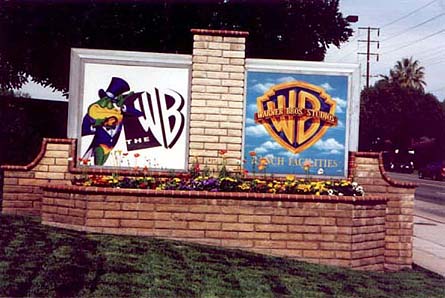
Warner Bros. Animation has now moved in to its new digs at the Warner Ranch (orginally the Columbia Ranch) north of the 101 between Pass Avenue and Hollywood Way. The studio is now housed on one part of the lot in connected trailers and -- a hundred-plus yards away -- in a three-story building.

I walked through all the different nooks and crannies this morning, and while the new spaces aren't as palatial as the old, they're functional and pleasant. Lower ceilings, but most people seemed okay with that.

Now what Warners needs is more production. Justice League the three other productions will soon be wrapping up.

I also cruised by Disney Feature Animation to find that everyone was at an "employee meeting" over at Burbank's fabled Pickwick Center. (For those who don't know, Pickwick is a recreational facility on Riverside Drive, containing bowling alleys, ice skating rink, and several large ballrooms. Plus a big park in the center -- seen below -- where the confab was held.)

The meeting was one of a series that the new Disney Feature Animation team has held, one more update on changes at WDFA. Glen Keane is happy with the new direction of Rapunzel and credited the new regime with helping to make the picture better; the new animation building -- slated to be built in Glendale -- is still a work in progress, and execs want artists' input. Management intends to make WDFA more transparent and various departments more communicative with each other as time goes on; technology from Pixar is being used on upcoming WDFA product.

One employee said to me that he thought story development was way better than when he first came to the studio (he's been there a few years.) I said that, judging from the morale of story crews up on the third floor, I think that's true. The artists don't feel as constricted and hemmed in by executives with their reams of notes the way they did several years back. Now its peers reviewing peers. Most people in the story department seem to like that a whole lot better.

Click here to read entire post

Creators Want More

...as they should. If you don't think you deserve more money, you're either already a bajillionaire or have low self-esteem.

Variety editor Peter Bart held forth on writers' demands in upcoming contract talks in the Big Trade Paper a few days back:

As a member of the Writers Guild, I received my ominous-looking green "ballot" the other day requesting a "yes" or "no" vote for its "pattern of demands." The Guild is girding for approaching negotiations with the studios and it clearly wants its members to rally around the flag.

Talk to random writers around town, and you come away with the sense that Hollywood scribes have indeed decided what it is they want the most.

They want more.

More money, more control, more of the back-end pie.

Memo to Mr. Bart: that's what every creator wants. More moolah, more creative independence, more and bigger residuals (which I guess comes under the "more moolah" file tab.)

Just last week an animation director said to me: "I just directed a DVD that's making the company big bucks. But I'm not getting any extra money into my pocket."

He didn't say that it wasn't fair. He just said he believed he deserved more. And I agree with him. I think that creators should get a bigger piece of the action. I also don't think companies should be able to own copyrights. Or patents. The actual human creators of that intellectual property should have the sole right of ownership.

Sadly, the United States congress decided otherwise a century ago, and here we are. Until the congress and President reverse their century-old decision, we're stuck. (And I'm not holding my breath for change anytime soon).

If entertainment workers expect more money for the fruits of their labor, they're going to have to acquire more leverage. Peter Bart notes that WGA President Patrick Verrone understands this need for more power and control:

One of Verrone's rallying cries is to gain appropriate participation for writers creating work for the Web, mobile phones and other digital platforms of the future.

And because the future is already upon us, Verrone isn't fretting about whether his fellow scribes are getting a big enough bite of the gross. He's worried whether they'll get paid at all for the use and re-use of their material on emerging platforms.

You've got to 'get real' before you can 'get rich,' Verrone seems to be saying, which surely is the subtext of that ominous-looking green card carrying the "pattern of demands."

You've got that right, Mr. Bart. Everybody in the biz has to "get real." They also have to devise new and effective ways to get more.

Click here to read entire post

Wednesday, June 06, 2007

Production Board Schedules

We've been working to pin down the actual time board artists have to spend on a production board. Obviously, artists who have long production experience and lots of artistic chops will be faster than a beginner still learning the craft.

What follows is a work breakdown from a twenty-year story and production board veteran...

11 Minute TV animation (1/2 - 22 minute show)

Necessary time needed to do 11 minute board: 6 weeks – 5 day work week / 8 hr day

16 – 20 script pages = 11 minute script (note: scripts over 17 pages are usually longer than 11 minutes and are over-written).

170 – 250 3-panel brd. pgs. / 11 minute script, or

250 – 325 2-panel brd. pgs. / 11 minute script

500 – 600 drawings / 11 minute script

8 – 15 3-panel brd. pgs. / 1 script page, or

12 – 30 2-panel brd. pgs. / 1 script page

24 – 45 drawings /1 script page

6 week deadline – 11 minute script

240 paid hours for 180 board hours (40 work week / 30 hours story board work)

• With an average of 40 min. for roughing and 20 min for clean up a 180 page story board should take 180 hours of board time and needs 6 working weeks to complete.

• Note in a typical work day there are approximately 4 –5 bathroom breaks (40 min. – 1 hr./day) along with 2 required 10 minute breaks (20 min), and at least 1 – 2 hours of some kind of meeting discussion time with the director, line producer, or production crew, and other duties (filling out time cards, page numbering, cleaning office, organization, & etc) so that actual time given to board work does not equal a full 8 hours but more like 5 – 6 hrs. / day and 25-30 actual boarding hours per work week.

In a 6 week schedule if a board artist is working on a 3 panel board page on a 4 week rough / 2-week clean up schedule:

42 - 62 rough 3pnl brd. pgs./ week (4 weeks)

85 – 125 clean up 3pnl brd. pgs./ week (2 weeks)

8 – 12 rough brd. pgs./day (4 weeks)

17 – 25 cleaned up brd. pgs./day (2 weeks)

1.3 – 2 rough brd. pgs. / hr. (4 weeks)

3 – 4 cleaned up brd. pgs. / hr. (2 weeks)

5 week deadline – 11 minute script

200 paid hours for 150 board hours (40 work week / 30 hours story board work)

• Note in a typical workday there are approximately 4 –5 bathroom breaks (40 min. – 1 hr./day) along with 2 required 10 minute breaks (20 min), and at least 1 – 2 hours of some kind of meeting discussion time with the director, line producer, or production crew, and other duties (filling out time cards, page numbering, cleaning office, organization, & etc) so that actual time given to board work does not equal a full 8 hours but more like 5 – 6 hrs. / day and 25-30 actual boarding hours per work week.

In a 5-week schedule, if a board artist is working on a 3 panel board on a 3 week rough / 2 week clean up schedule:

56 - 83 rough 3pnl brd. pgs./ week (3 weeks)

85 - 125 clean up 3pnl brd. pgs./ week (2 weeks)

9 – 14 rough brd. pgs./day

17 – 25 cleaned up brd. pgs./day (2 weeks)

1.5 – 2.3 rough brd. pgs. / hr.

3 – 4 cleaned up brd. pgs. / hr. (2 weeks)

You get twenty artists in a room, and you'll get twenty different opinions about how long a given task will take, how many hours it will take to make it high-quality, how many hours to make it adequate, etc. What the above breakdown strives to do is pitch the ball down the middle and present an average.

The above won't mean much to non-pros. It might even make their eyes glaze over. But what do the artists out there think?

Click here to read entire post

Tuesday, June 05, 2007

Studio Rounds

It's the usual week with the usual march through signator studios.

The way it usually goes: I show up at somebody's cubicle. They look up and give me a reflexive grin.

"Oh hi. What's happening at the other studios?"

I tell them to the best of my knowledge. Then: "How are things going around here?"

"Everything's fine." And a second smile.

I move on. But half way through the walk-through, somebody looks up and doesn't smile...

...and I get the issue that is usually rattling around the studio. Of late, it's too-short production board schedules and the unpaid overtime artists work to make the deadline.

This isn't the reality for every show at every studio. Some schedules, believe it or not, do reflect workplace reality. But others don't.

And the places where it doesn't? They were major topics at the May General Membership meeting.

Earlier this week, a production boarder did a breakdown of how, with the shortened schedule, any competent board artist was going to have thirty extra hours of work if she (or he) expected to deliver an eleven-minute board on time. Another told me that the only normal work-weeks he has are the ones where he's roughing out panels. When he gets to cleaning them up, he's "working insane hours."

TAG will meet with studios to address this issue.

Do any good? I'm hopeful. As of this afternoon, I got word from a well-known 'toon factory that after receiving TAG's letter about writers' outlines being mislabeled as "premises", it will retroactively pay short-changed writers for work performed.

Squeaking wheels, and all that.

Click here to read entire post

Monday, June 04, 2007

No Respect?

A few years ago, John Kimball (son of Ward) asked me to write a letter to the Television Academy defining what an animation director does, exactly. The reason John wanted the letter, he told me, was that writers of a prime-time animated show (which will go unnamed here) were attempting to get themselves nominated for Emmys as directors.

John K., a longtime animator and animation director himself, was a potentate in the television academy animation branch and took exception to this, hence his request for a letter from TAG outlining directorial duties. A few weeks later, John told me: "Some people weren't too thrilled with what you wrote. In fact, they were pissed." The story of my life.

That lengthy preamble leads me to the subject at hand: a new article in The Hollywood Reporter entitled Cel Division (which unfortunately hides behind a subcription wall). It seems that animation in general -- not just animation directors -- can't get much respect from the t.v. academy:

...In theory, there shouldn't be...much hand-wringing over an Emmy category, but the four [categories] that represent animation at the Primetime Emmys have been causing consternation almost since they were created in 1989. While most Primetime Emmy categories are fairly straightforward, largely separated by genre with subcategories for length, the animation categories cast a wide net over an entire style of visual presentation. That means adult cartoons go up against kids' fare, and dramatic animation can butt heads with comedic forms.

The animation categories also follow different submission and judging rules than the live-action ones; nominations are determined by votes from the Television Academy's animation branch only, and animated episodes are nominated for a single episode...

Funny thing. Like animated features, animated half-hours have almost always been shut out of categories where they competed with live-action shows...

Not since 1961, when "The Flintstones" was nominated in the outstanding program achievement in the field of humor category, has an animated series landed an Emmy nomination berth in a nonanimation category; none has ever won.

According to Television Academy senior vp John Leverence, submitting "Simpsons" as a comedy was an experiment -- initiated by producers at Gracie Films -- that failed.

"It was one of those situations where a very writer-driven production company was interested in seeing if what they considered to be essentially a three-camera sitcom could go in with their peers in the sitcom world," he recalls. "There was not an enthusiastic response from the live-action world of voters to "The Simpsons" coming over, so they went back to animation, where they have continued on to great success."

I'm going out on a limb here and predicting that The Simpsons Movie, even if it grosses $300 million domestic, will not be getting into the Academy Awards by way of a "Best Picture" nomination. Oscar let down his guard for Beauty and the Beast. It won't happen twice.

...Once resigned to staying in their own neighborhood of animation categories, shows often find they have other stumbling blocks to deal with. [Craig] McCracken's Foster's Home for Imaginary Friends ...is a children's show with limited adult appeal. The Daytime Emmys do have a children's animation category, but Foster's, like many shows on Comedy Central, doesn't run in the right day-part to qualify.

"It's frustrating for people on my end of animation," says McCracken, whose show lost last year to "Simpsons." "The people judging are adults, so they're going to honestly respond to things that communicate to them naturally, which is more adult humor."...

And so it goes. The Simpsons can't break into the coveted sitcom category because it's a 'toon, and Foster's can't nab a top-tier animation Emmy because it gets smothered every year by The Yellow Family.

Like I say. The entertainment biz, whether you're talking live-action or animation, is a pretty stone-hearted creature.

Click here to read entire post

Sunday, June 03, 2007

Making Less Than Dear Old Dad Did...

Time to switch gears for a sec.

I came across this CNN story about how guys in their thirties are doing compared to their fathers, and it triggered some hard memories.

American men in their 30s are earning less than their father's generation did, challenging a long-held belief that each generation will be better off than the one that preceded it, according to a new study published Friday...

Relying on Census Bureau figures, the study's authors found that after adjusting for inflation, men in their 30s in 2004 had a median income of about $35,000 per year, for a 12 percent drop compared with $40,000 per year for men in the same age group in 1974.

That stood in stark contrast to men in their 30s in 1994, who earned 5 percent more than their fathers did.

Similarly, American families, which experienced a 32 percent increase in income levels between 1964 and 1994, saw household income growth slow to 9 percent between 1974 and 2004, according to the report.

"There is clearly some story here that [U.S.] productivity gains are not trickling down to the median family," said John Morton, a co-author of the study and the managing director of economic policy initiatives at the Pew Charitable Trusts.

This took me back to the early sixties, when I was in junior high school.

Dad was making about twelve to fourteen grand a year at Disney. When you tacked on the royalties from his Christmas cards, the art shows, the royalties from the little indie films he did, he was up around twenty five to thirty grand per year. Thirty-five grand in a really good year.

This put us in the top quadrant of middle-classdom. Mom was stay-at-home. The family spent a big chunk of each summer at the beach. I'm told by my surviving parent that family income fluctuated wildly year to year, but I never noticed any difference in our living standards from the vantage point of the eighth grade.

Twenty-five to thirty-five thousand a year.

You make that kind of money now, you live in a studio apartment and drive a third-hand car. You clip coupons. Eat in a lot, with an occasional splurge at Burger King or Sizzler.

And if you're going to work in Toonland, expect big years and small years. Expect layoffs. As part of an extended family that's been in the animated sector of show biz for seventy years, I can tell you that it's a cruel business. Just when you think you've got stability and a rising standard of living, it can all get yanked away in the wink of an eye. All it takes is a couple of under-performing movies or a cancelled t.v. series.

The cold reality of the business, coupled with the income study that's just been released, is enough to give anyone pause.

Click here to read entire post

Saturday, June 02, 2007

Your Weekend B.O.

Which should be fine if you use Mitchum.

But as for box office, why it's clicking right along...

Pirates of the Caribbean retained its top position with $13.5 million on Friday (with a total of $186 million to date).

The live-action preggo comedy Knocked Up took in $9.8 million for the second slot...

And Shrek the Third galloped off with $7.4 million and a $235 million cume for third place...

Sunday Update:

To no one's surprise, Pirates of the Caribbean: At Wits End took the top spot in the weekend box-office estimates with $43 million, despite a 62% drop. Knocked Up squeaked out a second place with $29 million, and Shrek the Third was, well, third, with $26.7 million.

Of note, in about a week the latest Shrek will become the number three CG-animated film of all time, giving the Shrek franchise three of the top four spots on that list. It's safe to say the big green ogre and his cohorts have put more than a few butts into theater seats.

Click here to read entire post

Districting for Two

And how did Kevin Koch and I start our first June weekend? Why, by attending the IATSE District Two convention in foggy San Diego...

District Two is a gathering of I.A. locals from Hawaii, California, Nevada and Arizona, meeting to advance labor's agenda (you know, things like better health care, better wages, boring things like that.)

This year the festivities got started early in the morning and lasted well into the afternoon. The high point of the morning session was IA President Tom Short outlining some of the accomplishments and challenges that entertainment unions face in the immediate and not-so-immediate future:

* There's been an 83% injcrease in the Defined Benefit Pension Plan that covers 45,000 IATSE entertainment employees over the last twelve years.

* Basic cable is growing in viewership while broadcast networks are shrinking, and licensing fees -- which fuel the product that nourishes the t.v. industry (and labor unions that have contracts with that industry) -- are flat. This will present a problem for the teevee biz and unions that don't adapt to the changing market place.

* Because of the tensions between SAG/WGA and the movie and television producers (the AMPTP) there is already a defacto strike developing industry-wide. Short said that the IATSE isn't going to go "over the abyss" because of a couple of "irresponsible" guilds. (This is a theme he has hit on a lot of the last eighteen months...)

* Around the world: the issue of piracy is a large one. Piracy -- bootleg DVDs and illegal downloads -- cost the movie and t.v. industry $6 billion a year, $100 million of which would go into the IATSE's pension and health plans if those billions were collected. So this is an issue that affects workers, their jobs, and their pensions. Short said that he'll be going to Europe later this summer with Directors Guild officials to testify about piracy before various European governmens. He said it was important for "union members to put congress's feet to the fire on this issue."

* President Short intends to work with organizers in Eastern Europe to raise wages and generally raise the bar to "level the playing field" for entertainment workers back in the States.

* California needs a wage-tax incentives for the making of motion pictures to compete with other states that have them: "Connecticut has 17 features shooting inside its border because of tax incentives."

* Odds are (the Prez thinks) that the Democrats will pick up congressional seats in '08, as well as win the White House, although he won't venture a guess about who might win the nomination.

The rest of the convention has been organizing workshops, communication workshops, safety workshops, and the usual array of organized labor's various other issues.

Click here to read entire post

Friday, June 01, 2007

Hot Links of Animation

This summary is not available. Please click here to view the post. Click here to read entire post

A Josh Meador Landscape

Josh Meador painting
Click the thumbnail for a larger image

Speaking of Josh Meador, here's a Meador landscape from the collection of animation vet John Emerson. (TAG board member Carla Fallberg sent the above image our way...)

Mr. Emerson, recently retired from a long career at Disney, comments:

"Josh did this 5 1/2 by 7 1/2 painting in his home studio while I watched him. It was a demonstration of picking up bits of color from the palette with the knife and not over mixing before painting. This keeps the colors from becoming muddy. He did all this in about 5 minutes. I’m still amazed."

John says that he first watched Meador paint when he was at a family camping trip at El Capitan beach above Santa Barbara. John was then I was 11 or 12.

Josh Meador was an amazing talent, in a lot of different directions. It's easy to see why he headed up Disney's effects department for so many years.

Click here to read entire post

Thursday, May 31, 2007

The Last Hurrah of "The Simpsons Movie" Crew

Ran around to Starz Media and Rough Draft Feature Animation this a.m and p.m. At Starz Media, there is maybe a week or eight days left on the feature. (People I've seen on the feature the last nine months keep filtering back to "The Simpsons" television version.)

Work also continues on Slacker Cats, a series Starz Media is doing for the Disney Family Channel. An eleven-episode order is wrapping up, and there are rumors of more down the road, but thus far only rumors.

Over at Rough Draft Feature Animation (a cousin of Rough Draft Animation Glendale, which in turn is a cousin of Rough Draft Animation, Korea), The Simpsons Movie staffers are pretty much in their final days on the Yellow Family picture. I got lots of questions from artists about other work around town ("When is 'Princess and the Frog' going to start hiring? Anymore hand-drawn projects out there?")

I was delighted to answer promptly. I told them I didn't know...but I thought the end of '07 or the start of '08 was a good guess, and that I didn't know how much of The Princess and the Frog would be done in-house and how much someplace else (70%? 90%? Who knows?).

But as The Simpsons Movie wends its way to a conclusion, most of the staff's happy to have worked on it, confident of its success, and pleased that the writers over at the Fox lot on Pico kept rewriting, as it created more well-paid work. And well-paid work -- in these uncertain times -- is a good thing.

Click here to read entire post

Wednesday, May 30, 2007

"Winnie the Pooh" -- Soviet Style

From time to time TAG gets accused of being communist (my participation in the Great Patriotic War to Save Vietnam from the Reds to the contrary.) So we present... the Soviet animation industry's answer to Disney's "Winnie the Pooh."

In case you're wondering, Milt Kahl didn't animate on this version of the Milne tales. In fact, it's doubtful that Ivan Kahl worked on it.

The moral of this little fable: Don't overstay your welcome. A lesson the Soviets failed to learn in Afghanistan, and we failed to learn ... elsewhere.

We can only hope that Disney and the Milne family got their cut of the profits from the Workers' Paradise ...back when it was the Workers' Paradise.

1993 Peg-Board logo, by Tom Sito
The 1993 Peg-Board logo, by Tom Sito. © by the Animation Guild. Click on the thumbnail for a full image.
Click here to read entire post
A Few Words About Josh Meador

Josh Meador, born and bred in Louisiana, was an oil painter extraordinaire, and one of the giants of the Disney animation staff...

Josh lived in La Crescenta, California for decades (just a few blocks from our house.) He and my father were close chums for years, going on numerous painting trips the width and length of California.

Josh had a passion for "The Valley of Fire" in Nevada. And not just for its beauty. For years he searched for a treasure of gold he believed was hidden in the Valley. He never found it, but it wasn't for lack of trying.

Josh joined the Disney staff in the 1930s, and was soon promoted over more senior animators by Mr. Disney, who recognized a tyro effects animator when he saw one. As animator Eric Larson noted:

You know this guy Josh Meador* was a nut. He was absolutely dedicated. And the kinds of people with his talent, you don't very often find. He was so dedicated and observing and analytical, and his sense of timing for [effects animation] was terrific. He shot stuff in slow motion so people could study just exactly how water or milk or any substance of varied density would break up if something was tossed into it. So that the rest of the crew would know exactly how it would break up. All you have to do is look at that underwater stuff (on Pinocchio), and you realize that he really passed that information on to a lot of people. By the time we got to Fantasia, we had sixty four people in the effects department alone. We had about twelve hundred people in animation.

Meador was in charge of effects on Pinocchio, Fantasia and most of the Disney features that followed. And he did effects for 20,000 Leagues Under the Sea and Forbidden Planet for which MGM sub-contracted the Disney effects department. He also did his share of television. That flashing "Z" that Guy Williams carved into various jackets and uniforms as Zorro? Josh Meador animated a lot of them in stop motion.

Josh died in 1965, the victim of a congenital heart defect. His wife Libby told my father that she found him sitting on a step at their house in northern California, looking out at the Pacific. He just sat down and died, a cigarette smoldering in his hand. There are worse ways to go.

Click here to read entire post

Tuesday, May 29, 2007

El General Membership Meeting

A larger than usual turnout at tonight's membership meeting, and lots of animated discussion on written outlines disguised as premises, too-long storyboard tests, and the amazing shrinking storyboard (aka "production board") schedules...

For some reason, people seem exercised about working sixty hours and getting paid for forty while staying on deadline with storyboard schedules that get shorter and shorter.

"The usual rotation used to be six, even seven weeks for a half-hour production board. Now studios expect it in five weeks..."

"The producers don't like the shorter time lines, because boards are just adequate, everyone is straining just to get them done. But upper management insists..."

"Every studio wants more drawings for the animatic to look good. But there's less time to get them done..."

Consensus seems to be that schedules need to reflect how long it actually takes to do a half-hour television board, that some studios want five pages for a premise while at other studios the premise lengths are okay. (But three or five or ten page "premises" are actually outlines, and should be paid as outlines).

Everybody had to exit the building at eight o'clock. Discussion continued for another hour in the parking lot.

Click here to read entire post

Asian Goldleaf

Ralph Hulett goldleaf painting
© by the Estate Of Ralph Hulett. Click on the thumbnail to see a full-sized image.

Since today I've been running from one studio to another, posting has been like, minimal. But the above specimen is an R. Hulett painting on gold leaf in the Chinese style...

It's a long way from his usual kind of artwork, but I post it because a) the painting came back into my possession over the weekend, and b) it's shiny, and c) I'm cramped for time.

The painting -- thirty-seven years old -- was a gift from my dad to my grandfather, who owned it for decades. It's somewhat the worse for wear, but you can squint at it anyway...

Click here to read entire post

Monday, May 28, 2007

The "Go To" VFX House

Back when Disney was working on Dinosaur at Disney Feature Animation North (next to the Burbank Airport), a Wise Old Computer Supervisor said to me:

"There's just no profit margin for effects studios who specialize in just digital visual effects. The studios ask for bids from all the different houses, and they all cut each others' throats under-bidding each other..."

All except for one. Which Daily Variety profiles here:

ILM is lead shop or a major contributor to four of the summer's biggest tentpoles, all opening between Memorial Day and late July: Disney's "Pirates of the Caribbean: At World's End," Universal's "Evan Almighty," DreamWorks' "Transformers" and Warner Bros.' "Harry Potter and the Order of the Phoenix." The effort has to be one of the most prodigious technical accomplishments in the history of the biz...

"We were booked to just over 100% of capacity," says ILM topper Chrissie England of the push to get the quartet of summer films done.

ILM had to turn down some "Pirates 3" shots, and warned all clients that the f/x house didn't have excess capacity for any large, late additions.

There are a myriad of effects shops that can execute big, complicated shots studded with collapsing bridges, or giant marauding robots, or waves of attacking fighter planes. But studios want a comfort level that they only get by going with a big-name supplier who they believe can guarantee results. (No hot-shot director wants his big, special effects-laden action sequence loused up by some no-name operation in the San Fernando Valley.)

Funny thing is, a year or two after my conversation with that Wise Old Supervisor, Disney (with much fanfare) put together its very own internal special effects house called The Secret Lab, designed to do Disney's live-action features and also bid for outside work.

But do you think that Disney used its sparkly new TSL effects division for the money shots in the Disney big-budget extravaganza Pearl Harbor? Noooo. That gig went to ILM.

I mean, there are effects houses. And then there are effects houses.

Click here to read entire post

Sunday, May 27, 2007

Roberta Greutert, RIP

Roberta Reutert, longtime ink-and-paint supe at Hanna Barbera, has passed away at the age of 93...

Born in Tennessee in 1914, she began her career in animation as a painter at MGM in 1938. While at MGM, she worked as a background artist in the CineScope Tom and Jerry shorts, TIMID TABBY (1957) and HAPPY GO DUCKY (1958).

In 1957, when the studio closed, she went to Hanna-Barbera, working as the ink-and-paint supervisor until she retired in the 1970s.

Another person who remembered animation's early days has departed, and one more doorway to our history is closed. And so it goes.

Click here to read entire post
Site Meter